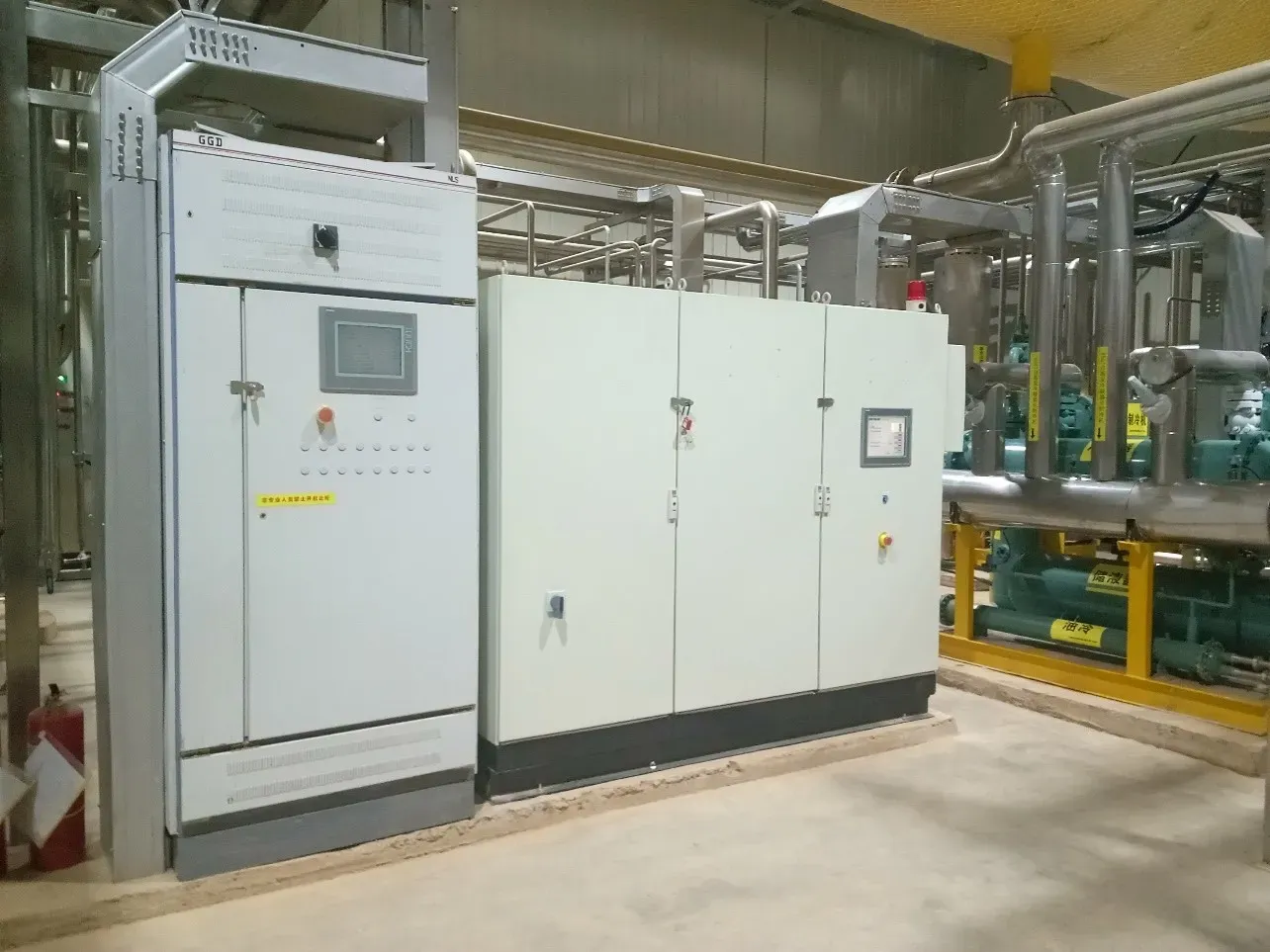
The Central Control Platform
A complete CO₂ recovery plant contains numerous interconnected process units.
The washing system affects the compressor.
The compressor affects the dryer.
The dryer affects the liquefaction system.
The liquefaction system affects storage.
The online analyzer provides quality information.
All of these systems must operate together.
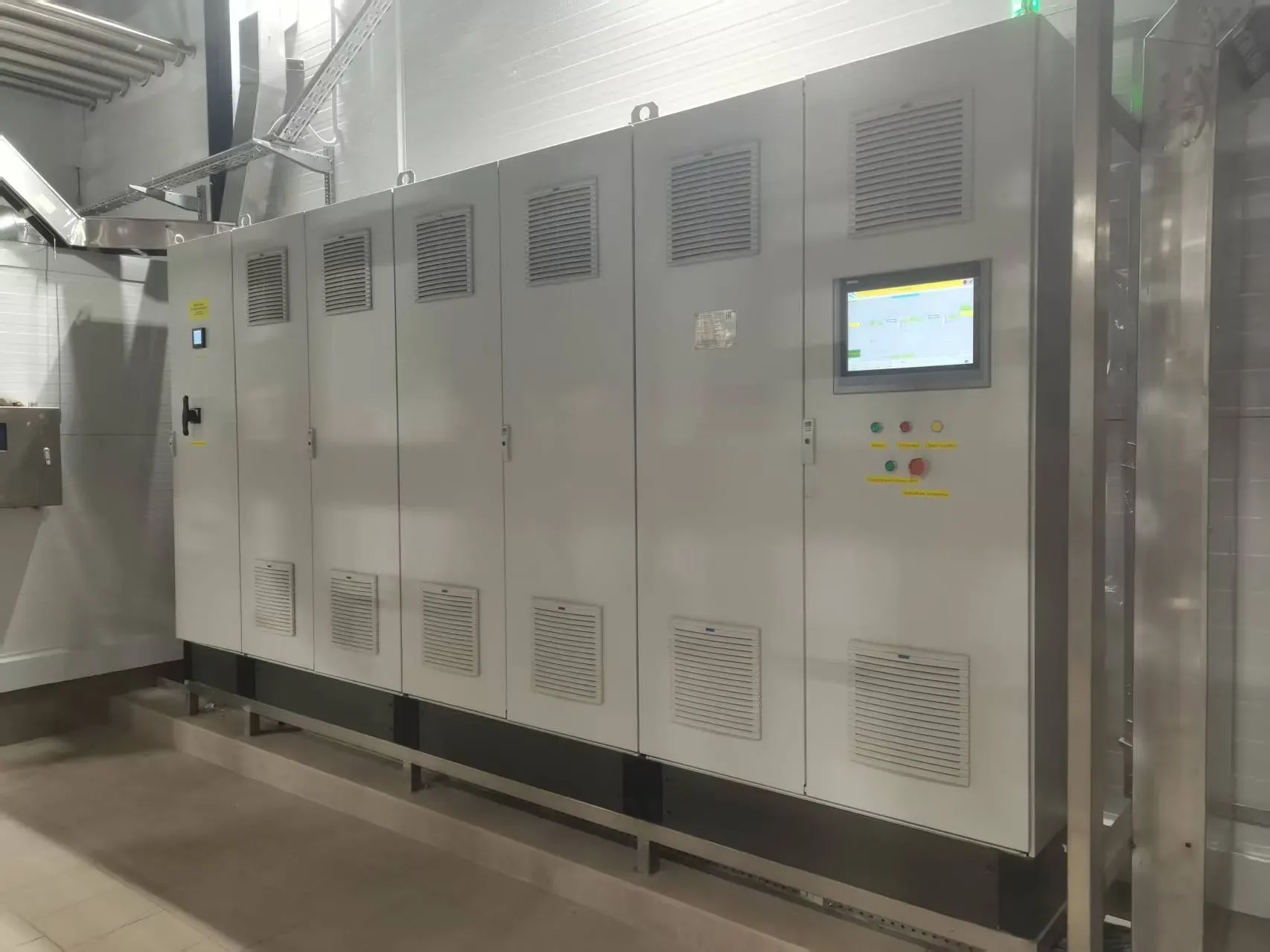
The DCS System provides the central platform that coordinates them.
Real-Time Monitoring
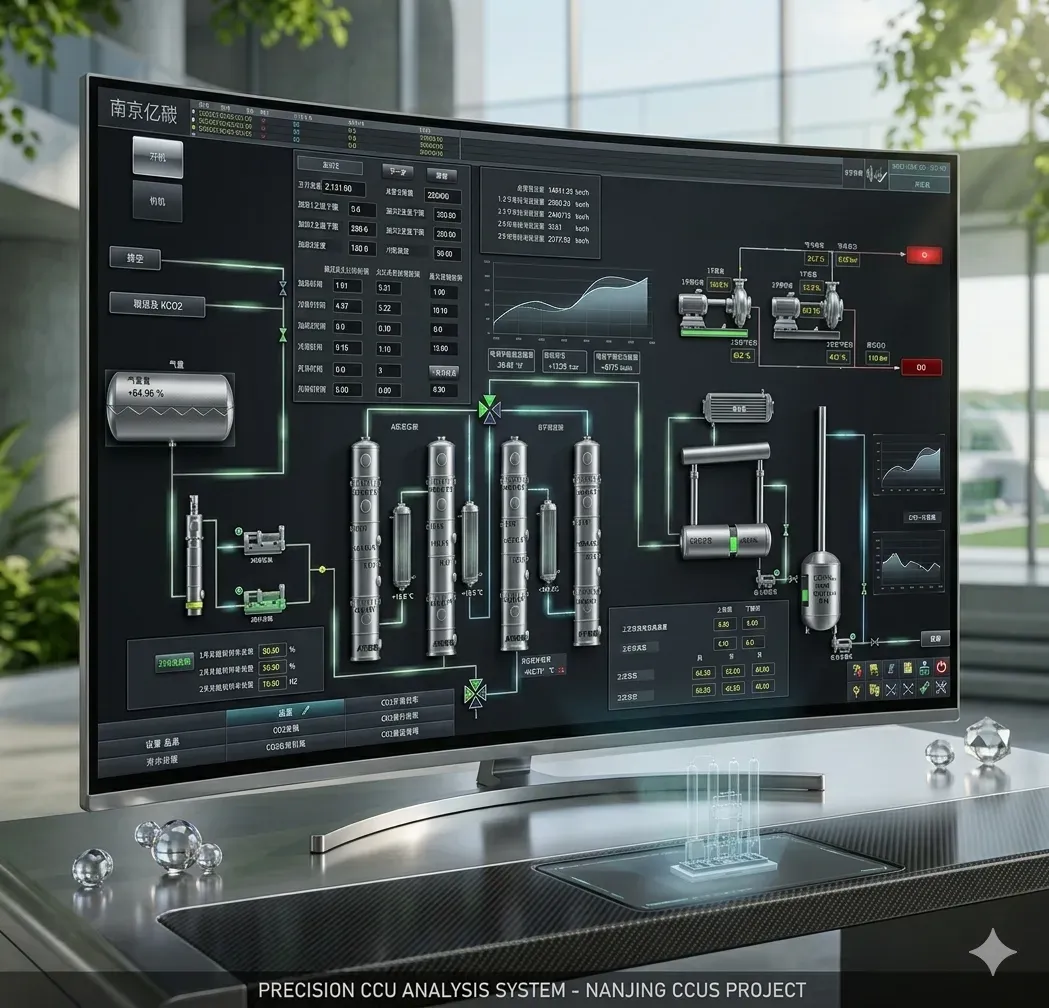
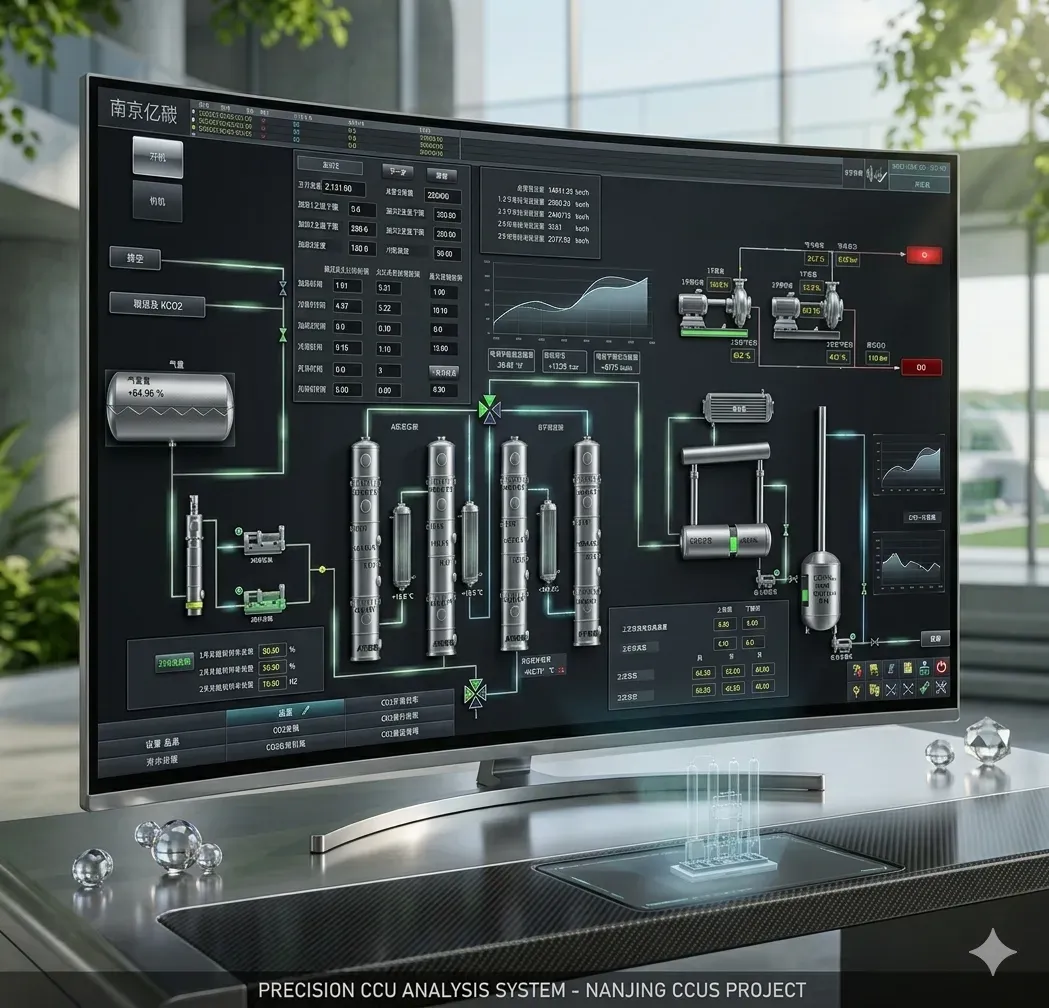
The DCS collects information from field instruments throughout the plant.
Typical parameters include:
- Pressure
- Temperature
- Flow
- Liquid level
- Valve status
- Compressor status
- Refrigeration status
- Dryer operating mode
- Analyzer readings
- Storage tank conditions
Operators can view these values from the central control room.
Automatic Process Sequences
Several processes require precise sequences.
The adsorption dryer needs automatic switching between adsorption and regeneration.
The compressor needs controlled startup and shutdown.
The refrigeration system requires a defined startup sequence.
The DCS automates these operations according to the process logic.
Compressor Control
The DCS can monitor compressor suction pressure, discharge pressure, temperature and running status.
Abnormal conditions can trigger alarms or protective actions.
This reduces the possibility of incorrect manual operation.
Dryer Control
Automatic valve sequencing is particularly important for adsorption dryers.
The DCS coordinates adsorption, regeneration, cooling and switching.
This allows the drying system to operate continuously.
Refrigeration Control
The DCS can also manage refrigeration capacity according to the CO₂ process conditions.
Pressure and temperature information is used to maintain stable operating conditions.
Storage Management
Tank pressure, temperature and liquid level are monitored continuously.
The DCS can coordinate production with available storage capacity.
This reduces the risk of producing more liquid CO₂ than the storage system can safely accommodate.
Analyzer Integration
The CO₂ Online Monitor can transmit data to the DCS.
Operators can therefore view process and product-quality information on the same interface.
This creates a direct connection between production control and quality control.
Alarm Management
The DCS can provide alarms for abnormal conditions.
Typical alarms may include:
- High pressure
- Low pressure
- High temperature
- Low temperature
- High tank level
- Low tank level
- Compressor fault
- Refrigeration fault
- Dryer abnormality
- Analyzer alarm
The exact alarm philosophy depends on the project.
Historical Data
Process data can be stored for trend analysis.
Historical information helps engineers understand changes in operating conditions and equipment performance.
It can also support maintenance and troubleshooting.
YTC Automation Philosophy
YTC's current website identifies DCS as one of its dedicated CO₂ recovery units and emphasizes full automation, stable operation and integration of process equipment.
The DCS therefore serves as the central control layer rather than an optional add-on.
Supporting Stable Production
The ultimate purpose of automation is process stability.
When pressure, temperature, flow, level and quality parameters are continuously monitored and controlled, the plant can operate more consistently.
For food-grade CO₂ production, this consistency is especially important.