
Reliable Adsorption Material for CO₂ Purification
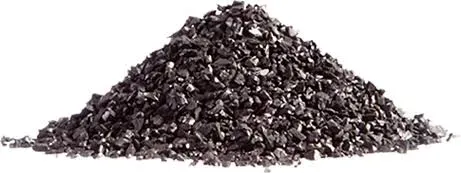
Activated Carbon is a porous carbonaceous material widely used as an adsorption medium in gas purification.
Its internal pore structure provides a large surface area for capturing selected trace impurities from gas streams.
In a CO₂ recovery system, the recovered carbon dioxide may contain small quantities of organic compounds, odors and other impurities depending on the original source of the gas.
Activated Carbon helps remove these contaminants during the purification process, providing an additional level of treatment before the CO₂ is liquefied and stored.
As a consumable material, its performance and service life are closely related to the actual composition of the incoming CO₂.
A Key Consumable in CO₂ Recovery
Unlike compressors, heat exchangers, storage tanks and control systems, Activated Carbon is a consumable material.
During operation, impurities are gradually adsorbed onto the surface and within the pores of the carbon.
As the adsorption capacity is gradually consumed, the Activated Carbon needs to be replaced or regenerated according to the specific system design.
Therefore, regular inspection and timely replacement of Activated Carbon are important parts of long-term CO₂ recovery plant operation.
Removing Trace Impurities
Activated Carbon is mainly used to remove selected trace contaminants rather than the bulk CO₂ itself.
Depending on the feed gas and carbon grade, it can be used to adsorb various organic compounds, odor-causing substances and certain sulfur-containing impurities.
This makes Activated Carbon particularly useful when the recovered CO₂ needs to meet strict quality requirements for food and beverage applications.
The exact adsorption performance depends on the type of Activated Carbon, impurity concentration, gas temperature, pressure, contact time and other operating conditions.
Suitable for Different CO₂ Sources
The requirements for Activated Carbon can vary significantly according to the source of recovered CO₂.
Ethanol
CO₂ recovered from ethanol fermentation may contain alcohol vapor and other trace organic compounds.
Activated Carbon can help reduce these unwanted substances during the purification process.
Molasses
CO₂ generated during molasses or waste-molasses fermentation may contain various fermentation-related organic impurities.
An appropriately selected Activated Carbon can provide additional adsorption capacity for these trace contaminants.
Brewery
Brewery fermentation generates CO₂ together with trace compounds that may affect odor or product quality.
Activated Carbon can be used as part of the purification process to help produce cleaner CO₂ for subsequent liquefaction and reuse.
Flue Gas
For flue-gas-derived CO₂, the required purification media depend strongly on the upstream treatment process and actual gas composition.
Activated Carbon may be used for selected trace contaminants when its adsorption characteristics are suitable.
Natural Gas
CO₂ recovered from natural-gas-related processes may contain hydrocarbons or sulfur-containing compounds.
The Activated Carbon type should therefore be selected based on the actual gas analysis and target impurity levels.
Different Activated Carbon Grades
Not all Activated Carbon has the same adsorption characteristics.
Different raw materials, activation processes, pore structures and surface treatments can result in different adsorption capacities and selectivities.
For CO₂ purification applications, the appropriate carbon should therefore be selected according to the specific contaminants that need to be removed
YTC can select and supply suitable Activated Carbon according to the specific CO₂ recovery system and operating conditions.
Activated Carbon Service Life
The service life of Activated Carbon depends primarily on the impurity loading of the incoming gas.
A relatively clean CO₂ stream may allow a longer replacement interval, while a gas stream containing higher concentrations of organic or sulfur compounds may consume the adsorption capacity more quickly.
Therefore, Activated Carbon consumption should not be estimated only according to the CO₂ production capacity.
The actual raw-gas composition is equally important.
For this reason, YTC recommends determining the appropriate carbon quantity and replacement cycle based on actual process conditions.
Quality and Consistency
For food-grade CO₂ recovery, the quality of consumable materials is important.
Activated Carbon should be supplied with consistent physical and adsorption properties suitable for the intended gas purification application.
Consistent material quality helps maintain stable purification performance throughout the operating cycle.
Easy Replacement and Maintenance
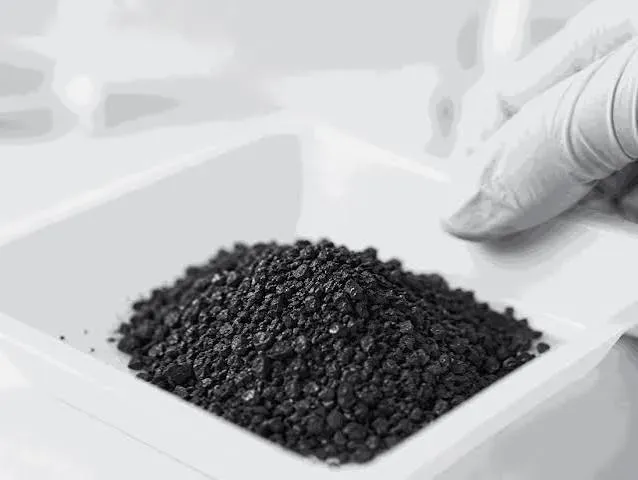
As a consumable, Activated Carbon should be convenient to inspect and replace during routine maintenance.
The replacement procedure depends on the design of the adsorption equipment and the type of carbon being used.
During replacement, attention should be paid to proper isolation, depressurization, removal of spent carbon and loading of fresh carbon.
After replacement, the system should be returned to operation according to the recommended startup procedure.
Regular maintenance helps prevent declining adsorption performance from affecting the final CO₂ quality.
Supporting High-Purity Liquid CO₂ Production
Activated Carbon is only one part of the complete CO₂ purification process.
It works together with other treatment technologies, including:
Washing → Compression → Drying → Activated Carbon Adsorption → Purification → Liquefaction → Storage
Each stage has a different purpose.
Activated Carbon provides targeted adsorption of selected trace contaminants, while other process units handle moisture removal, phase separation, compression, purification and liquefaction.
When the appropriate carbon material is selected and properly maintained, it can contribute to the stable production of high-purity liquid CO₂.
YTC Activated Carbon Supply
As part of its complete CO₂ recovery solutions, YTC can provide Activated Carbon as a consumable material for CO₂ purification systems.
The recommended carbon type and quantity can be determined according to the customer's CO₂ source, gas composition, plant capacity and required product quality.
This allows the consumable to be matched with the actual purification process rather than using a generic Activated Carbon specification.
For customers operating YTC CO₂ recovery plants, regular Activated Carbon supply can also be incorporated into the plant's ongoing maintenance and consumables management program.
Activated Carbon for Long-Term CO₂ Plant Operation
The performance of a CO₂ recovery plant depends not only on the major equipment, but also on the quality and timely replacement of consumable materials.
Activated Carbon is one of these important consumables.
With appropriate material selection, regular inspection and timely replacement, Activated Carbon can continuously support the removal of trace impurities and help maintain the required CO₂ product quality.
For food-grade CO₂ recovery applications, it is therefore an important and relatively simple component of the overall purification strategy.