A Buffer Between Production and Consumption
Liquid CO₂ production and customer consumption do not always occur at exactly the same rate.
A recovery plant may operate continuously while a customer receives CO₂ by tanker at scheduled intervals.
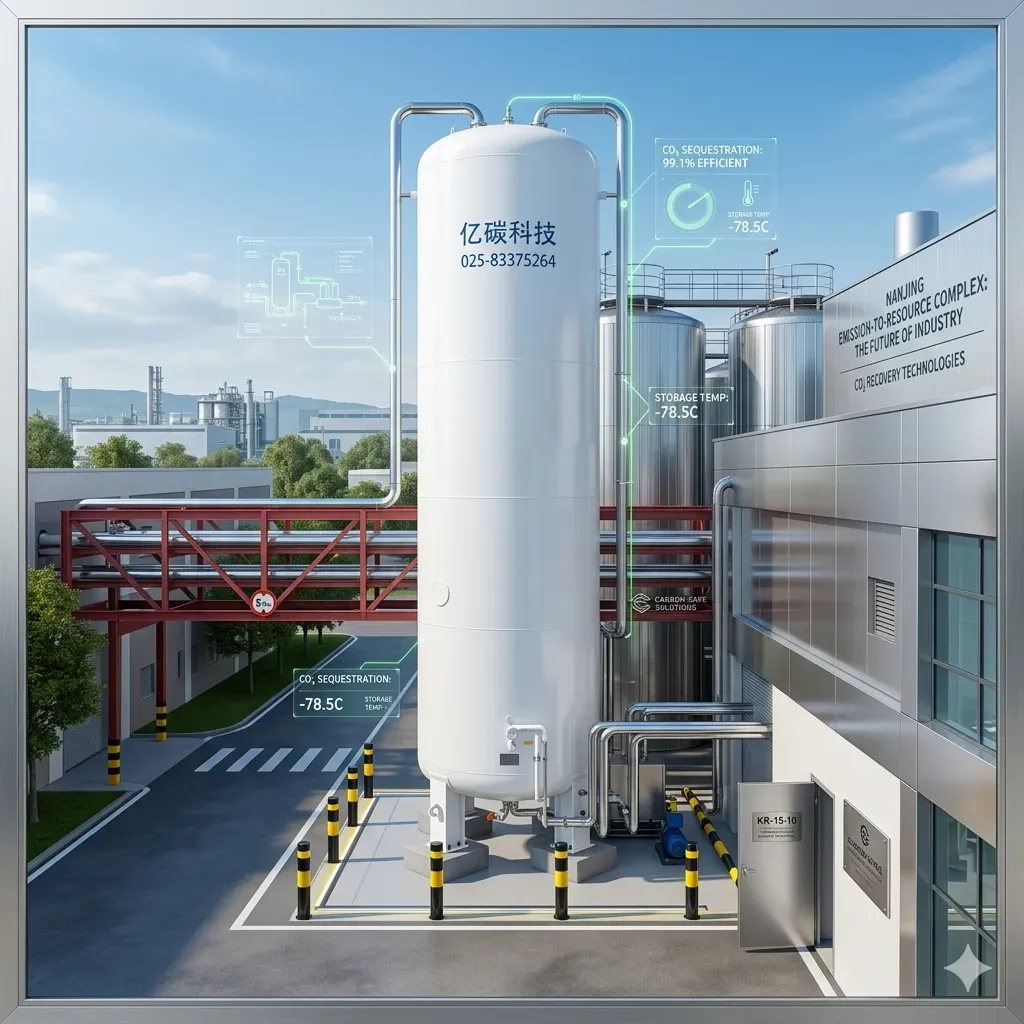
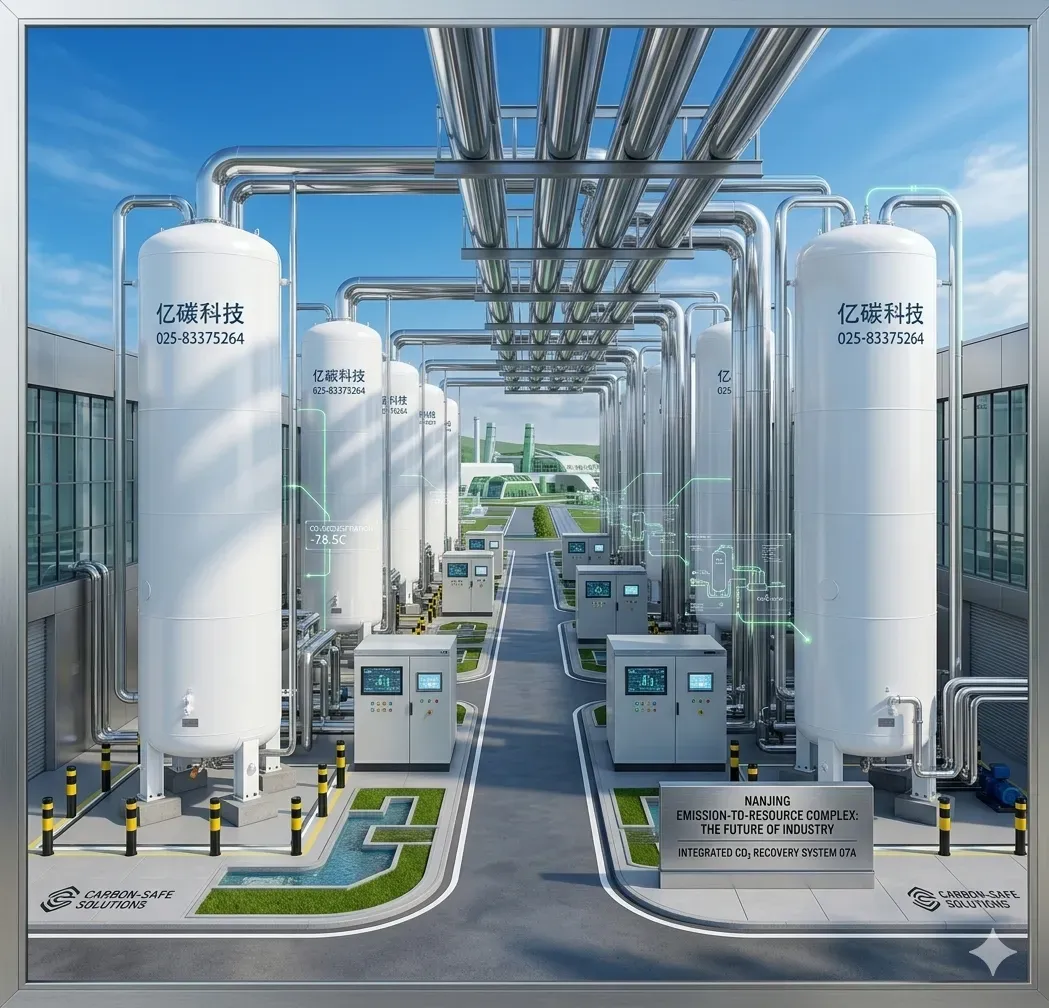
The Liquid CO₂ Storage Tank Storage Unit provides the necessary buffer.
It stores the recovered liquid CO₂ after liquefaction and allows the production system to continue operating while downstream customers arrange delivery or consumption.
Storage Capacity
The appropriate tank capacity depends on the project.
Important factors include:
- CO₂ production rate
- Daily operating hours
- Customer consumption
- Tanker loading frequency
- Transportation distance
- Required reserve capacity
- Seasonal demand
A properly sized storage system can improve the commercial flexibility of the CO₂ recovery plant.
Controlled Storage Conditions
Liquid CO₂ is stored under controlled pressure and temperature conditions.
The storage tank must therefore be designed according to the required operating conditions and applicable pressure-vessel regulations.
Pressure, temperature and liquid level are monitored continuously.
Liquid Level Monitoring
Liquid level is one of the most important operating parameters.
A level transmitter provides information about the available storage volume.
High-level alarms help prevent overfilling.
Low-level alarms can indicate that additional production or delivery planning may be required.
The information can be displayed through the central DCS.
Pressure Management
Tank pressure must remain within the defined operating range.
The storage system can incorporate pressure monitoring and appropriate safety and pressure-management devices.
The exact configuration depends on the tank design, applicable regulations and project requirements.
Liquid CO₂ Transfer
The storage tank can supply liquid CO₂ to:
- Beverage plants
- Food-processing facilities
- Dry ice production
- Industrial gas filling systems
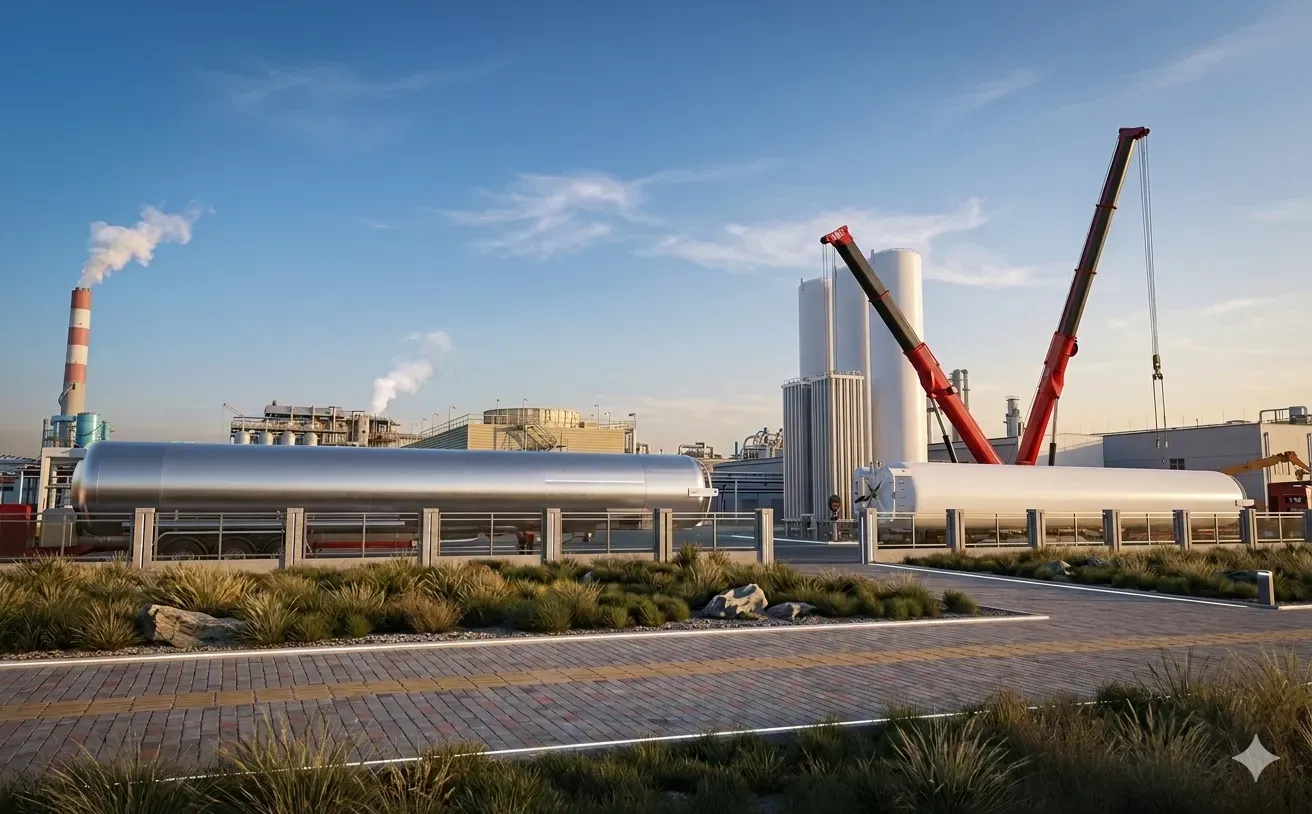
- Tanker trucks
- Other downstream users
Transfer piping and valves are selected according to the required pressure, flow rate and operating conditions.
Reducing Product Loss
Efficient storage and transfer design can help minimize unnecessary CO₂ loss.
Proper pressure management, insulation, valve selection and transfer procedures contribute to better product utilization.
Where appropriate, gas return or recovery arrangements can also be considered.
Product Quality During Storage
The storage system should maintain the quality achieved by the purification and liquefaction processes.
Materials, valves and connections should be selected according to the intended application.
The system should also minimize contamination opportunities during transfer and loading.
Integration with Liquefaction
Storage and liquefaction must work together.
If tank level approaches its maximum operating level, the liquefaction system may need to reduce or stop production.
If storage level falls, production can resume according to the control strategy.
The DCS provides the coordination mechanism.
YTC Complete Storage Solution
YTC's English website includes CO₂ Storage Tank, CO₂ Liquid Tank Container, CO₂ Liquid Lorry Tanker and CO₂ Thermal-Insulating Cylinder within its CO₂ product portfolio.
This allows the storage section to be considered as part of a wider liquid CO₂ handling and distribution solution.