Engineered for Bulk Liquid CO₂ Distribution
Liquid CO₂ transportation requires more than simply installing a pressure vessel on a trailer. The complete vehicle must balance payload, tare weight, thermal performance, pressure management, road stability, loading efficiency, and regulatory requirements.
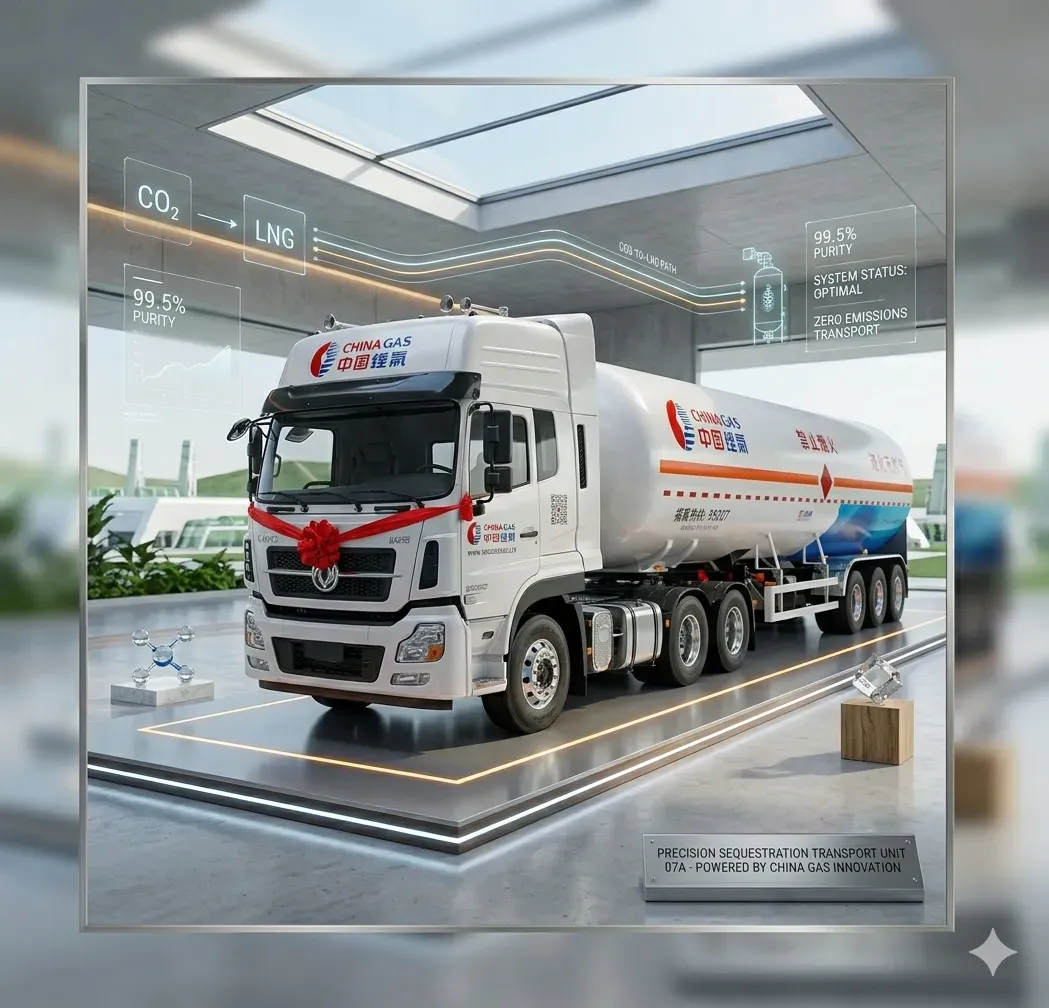
The YTC Liquid CO₂ Road Tanker is designed as an integrated transportation system in which the pressure vessel, insulation, piping, operating controls, safety devices, and vehicle structure are engineered to work together.
The result is a practical solution for transporting large quantities of liquid CO₂ efficiently between production and consumption locations.
High-Capacity Liquid CO₂ Transport
For industrial gas distributors and CO₂ producers, transportation efficiency has a direct impact on operating cost.
The YTC tanker is designed to maximize practical liquid CO₂ carrying capacity while considering vehicle weight, axle loading, road regulations, and operating safety.
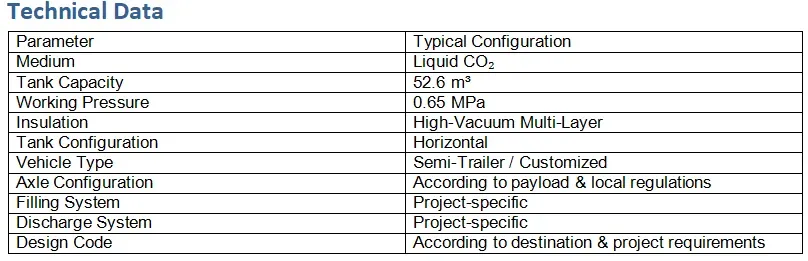
A typical YTC configuration provides a tank capacity of 52.6 m³, while project-specific configurations can be evaluated according to transportation requirements and applicable regulations.
- Increase liquid CO₂ delivered per trip
- Reduce transportation frequency
- Improve fleet utilization
- Reduce transportation cost per unit of CO₂
- Improve overall CO₂ distribution efficiency
Final payload depends on tank configuration, filling conditions, vehicle tare weight, axle arrangement, and applicable road-weight limits.
High-Performance Thermal Insulation
Thermal performance is critical during liquid CO₂ transportation. Heat entering the tank causes part of the stored liquid CO₂ to vaporize, resulting in pressure rise inside the vessel. Effective insulation therefore helps maintain stable transport conditions and reduce unnecessary product losses.
The YTC Liquid CO₂ Road Tanker uses high-vacuum multi-layer insulation to minimize heat transfer from the surrounding environment.
- Low heat ingress
- Controlled pressure rise
- Reduced evaporation losses
- Stable liquid CO₂ transport conditions
- Reliable performance during regional and long-distance distribution
Actual thermal performance depends on tank capacity, filling level, operating pressure, ambient conditions, transportation duration, and insulation configuration.
Pressure Vessel and Tanker Construction
The liquid CO₂ vessel is engineered for pressurized low-temperature service and integrated with the road tanker chassis as a complete transportation system.
- Pressure-vessel strength
- Liquid CO₂ operating conditions
- Vehicle tare weight
- Payload optimization
- Tank support structure
- Road vibration and dynamic loads
- Center of gravity
- Axle-load distribution
- Maintenance accessibility
The vessel materials, welding procedures, inspection, testing, and structural design are selected according to the applicable project and regulatory requirements.
Loading and Unloading System
Efficient transfer of liquid CO₂ is essential for tanker operation. The YTC road tanker can be configured with an integrated piping and valve system for loading liquid CO₂ at the production plant and unloading it into the customer's storage tank or distribution facility.
- Liquid filling line
- Liquid discharge line
- Gas-phase / vapor-return line
- Pressure indication
- Liquid-level indication
- Isolation valves
- Vent connections
- Pressure relief devices
- Transfer hose connections
The piping arrangement and connection standards can be customized to match the customer's loading station and receiving facility.
Efficient Liquid CO₂ Transfer
Different CO₂ distribution networks may require different unloading arrangements. Depending on site conditions and project requirements, the tanker transfer system can be engineered around the available pressure differential or other suitable liquid-transfer arrangement.
The objective is to provide controlled, efficient, and reliable liquid CO₂ transfer while minimizing unnecessary product loss and unloading time.
The final transfer configuration is selected according to tanker pressure, receiving-tank conditions, required unloading rate, and customer operating procedures.
Safety and Pressure Management
Liquid CO₂ is transported under pressure, making reliable pressure control and overpressure protection essential.
The tanker can incorporate safety and monitoring systems appropriate to the selected configuration and applicable design requirements, including:
- Pressure relief protection
- Pressure monitoring
- Liquid-level monitoring
- Isolation valves
- Controlled venting
- Emergency operating provisions
- Protective valve and piping arrangements
The pressure vessel and transportation system should be designed, manufactured, inspected, tested, and operated in accordance with the applicable regulations of the destination market.
Designed for Road Stability and Practical Operation
A liquid CO₂ tanker operates under continuously changing road conditions. Vehicle stability and weight distribution are therefore important design considerations.
YTC considers tank position, center of gravity, axle arrangement, payload distribution, chassis configuration, and operating accessibility during vehicle engineering.
The operating area is arranged to provide practical access to valves, instruments, and transfer connections, helping simplify routine loading, unloading, inspection, and maintenance.
Customized for Local Transportation Regulations
Road tanker requirements vary significantly between countries and regions. Maximum gross vehicle weight, axle loads, vehicle dimensions, pressure-vessel regulations, hazardous-goods transportation requirements, and inspection procedures may all affect the final tanker design.
YTC therefore evaluates each project according to:
- Required liquid CO₂ payload
- Tank capacity
- Working pressure
- Local road-weight limits
- Axle-load requirements
- Trailer configuration
- Loading and unloading requirements
- Destination-country regulations
- Operating environment
- Customer-specific technical requirements
This project-based approach allows the tanker configuration to be optimized for the actual transportation route rather than applying a single vehicle design to every market.
Liquid CO₂ Transportation Applications
- Food and beverage CO₂ distribution
- Brewery and ethanol CO₂ recovery plants
- Dry ice production facilities
- Industrial gas companies
- Chemical and petrochemical plants
- CO₂ filling and distribution terminals
- Greenhouse CO₂ supply
- Water-treatment applications
- Industrial CO₂ users
- Carbon capture and utilization projects
The final tanker configuration is selected according to the required CO₂ quality, transportation distance, payload, unloading method, and destination requirements.
From CO₂ Recovery Plant to End User
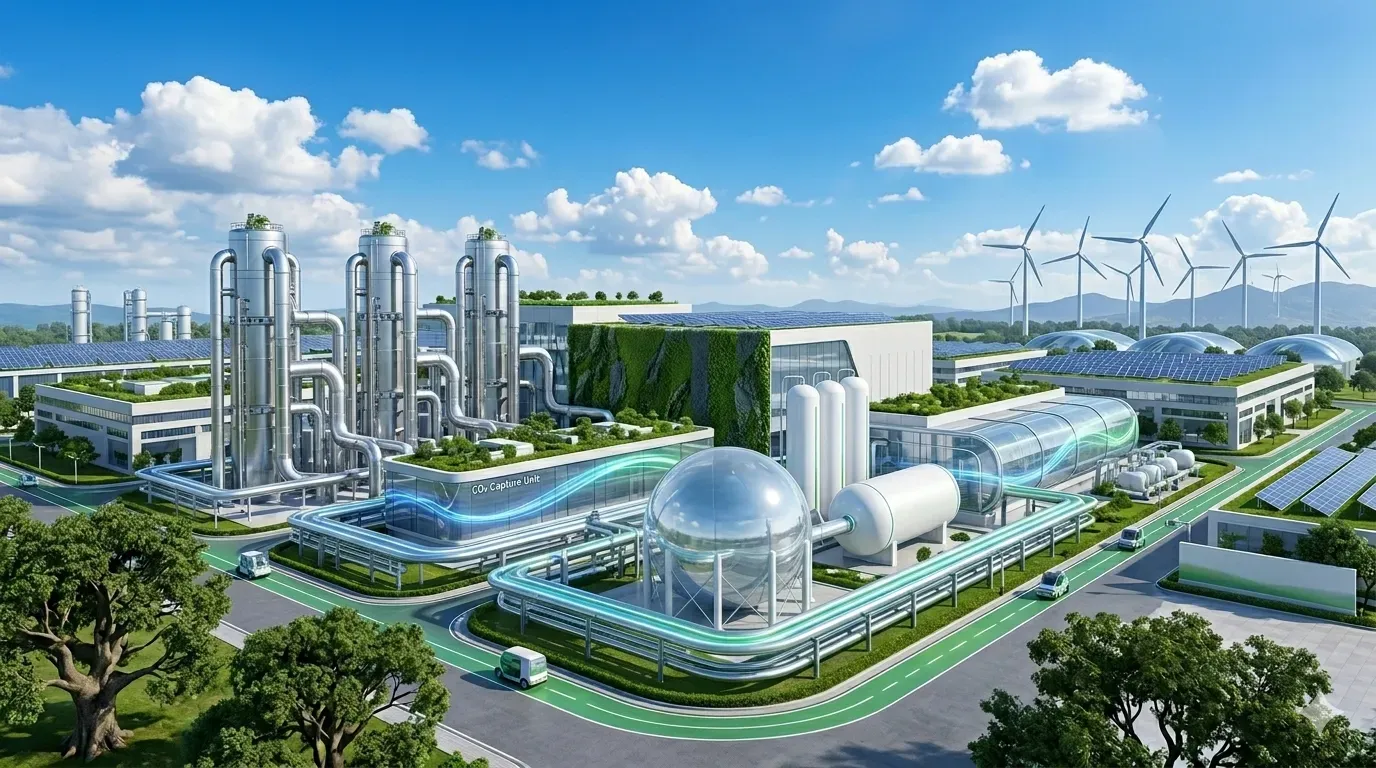
For a commercial CO₂ recovery project, producing high-purity liquid CO₂ is only part of the complete supply chain. The recovered product must also be stored, loaded, transported, and delivered efficiently.
Typical supply chain: CO₂ Recovery & Purification → CO₂ Liquefaction → Bulk Liquid CO₂ Storage → Tanker Loading System → Liquid CO₂ Road Tanker → Customer Storage Tank / Distribution Terminal
This integrated approach allows customers to consider the entire CO₂ value chain—from raw gas recovery to commercial liquid CO₂ delivery.
YTC Liquid CO₂ Storage & Transportation Solution
YTC provides integrated solutions covering CO₂ recovery, purification, liquefaction, storage, loading, transportation, and downstream distribution.
With 20+ years of experience in CO₂ treatment and recovery and 200+ CO₂ projects completed worldwide, YTC combines process engineering, equipment manufacturing, project execution, commissioning, and technical support for customers across global markets.
The Liquid CO₂ Road Tanker can be supplied as individual transportation equipment or integrated with a complete YTC CO₂ recovery and distribution project.
Each solution is developed according to the customer's CO₂ production capacity, required payload, transportation distance, road regulations, loading and unloading conditions, storage strategy, and downstream market requirements.
From CO₂ recovery plant to end user, YTC helps customers build an efficient and reliable liquid CO₂ supply chain.