The Physical Interface of the Control System
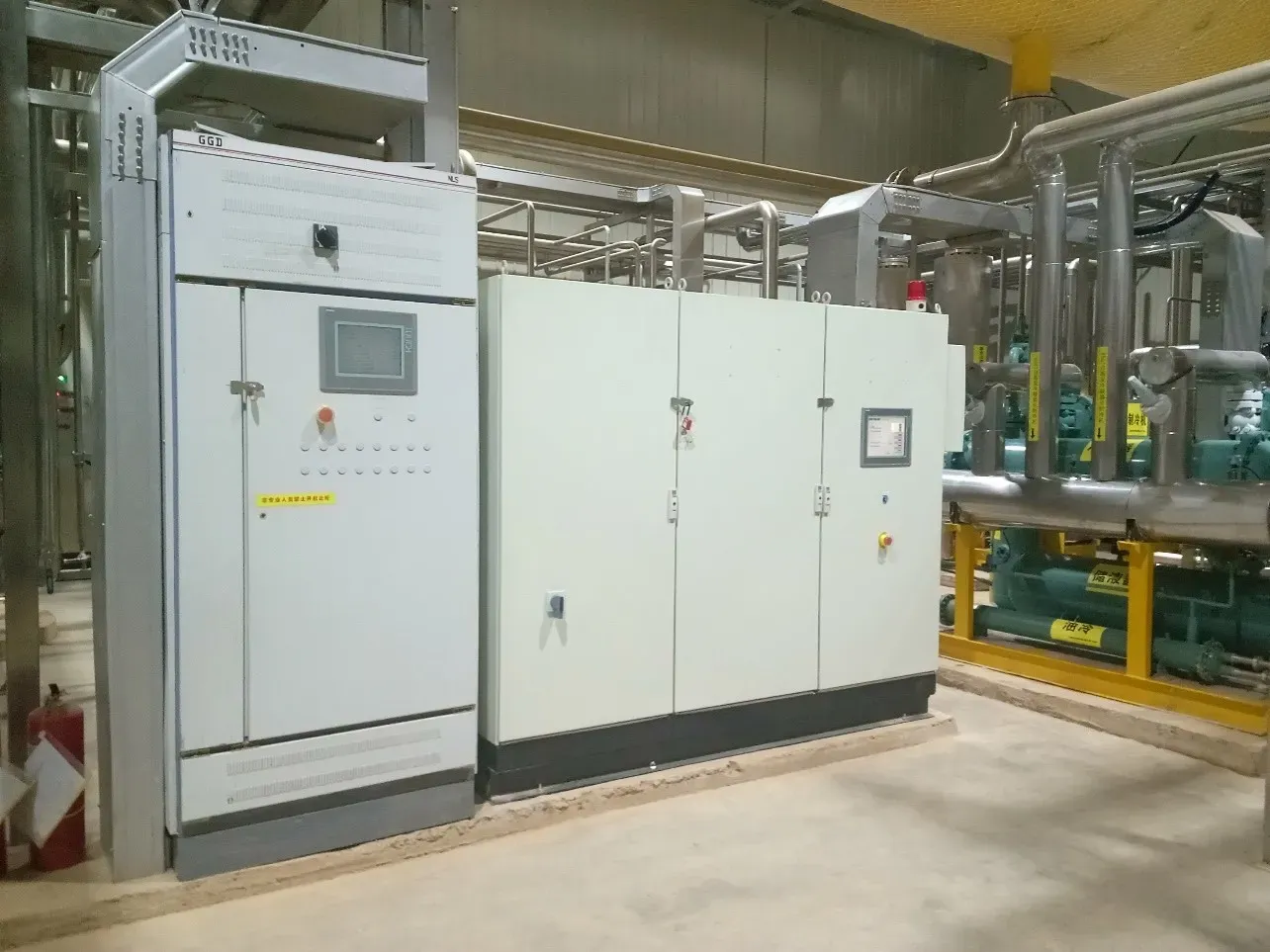
While the DCS provides the software and supervisory control platform, the Control Cabinet System provides the physical electrical and control infrastructure connecting the plant's equipment and instruments.
Signals from pressure transmitters, temperature sensors, flow meters, level transmitters, analyzers and equipment status devices are transmitted through the control architecture.
The cabinet organizes these signals and connects them to the appropriate control system.
Centralized Electrical and Control Architecture
A complete CO₂ recovery plant contains numerous motors, valves, sensors and process devices.
The control cabinet provides an organized interface for these components.
Depending on the project, the cabinet may contain:
- PLC/DCS modules
- Power supplies
- Relays
- Terminal blocks
- Communication modules
- Circuit protection
- Signal interfaces
- Control components
- Emergency and interlock interfaces
The exact configuration is developed according to the plant design.
Compressor Interface
The compressor requires electrical power, control signals, status feedback and protective functions.
The control cabinet provides the interface between the compressor package and the central control system.
Operating status, alarms and protection signals can be transmitted to the DCS.
Valve Control
Automatic valves are essential to several CO₂ processes.
The adsorption dryer, for example, requires multiple valves to switch between adsorption and regeneration.
The control cabinet provides the electrical interface required for valve operation and feedback.
Refrigeration Equipment
Refrigeration compressors, pumps, fans and other auxiliary equipment require coordinated electrical control.
The control cabinet connects these devices to the central automation architecture.
This allows the refrigeration section to operate according to the process requirements established by the DCS.
Instrumentation
Field instruments provide the data required for automatic process control.
Typical instruments include:
- Pressure transmitters
- Temperature transmitters
- Flow meters
- Level transmitters
- Differential-pressure instruments
- Gas analyzers
- Equipment status signals
The cabinet provides organized termination and signal management.
Safety and Protection
Electrical protection is an important part of cabinet design.
The system can incorporate appropriate circuit protection, overload protection, emergency-stop interfaces and equipment interlocks according to the project's electrical and safety requirements.
Communication
Modern CO₂ recovery plants often contain equipment from multiple suppliers.
Communication modules can allow different equipment packages to exchange operating information with the central DCS.
This helps create one unified operating platform.
Maintenance and Troubleshooting
A well-designed control cabinet should also make maintenance easier.
Clear labeling, organized wiring, accessible components and standardized documentation allow engineers and electricians to identify faults more efficiently.
This can reduce commissioning and maintenance time.
Integration with YTC DCS
The Control Cabinet System and DCS work together.
The cabinet handles the physical electrical and signal interface.
The DCS provides process monitoring, control logic, sequencing and operator interaction.
Together, they form the automation backbone of the CO₂ recovery plant.
Designed for Complete Plant Integration
YTC's current English website positions its CO₂ recovery business around integrated design, manufacturing, engineering construction and after-sales service, rather than supplying isolated components alone.
This makes the control cabinet an integral part of the overall engineering package.
Supporting Long-Term Plant Operation
The purpose of the Control Cabinet System extends beyond commissioning.
It provides the electrical and control foundation for long-term operation.
When combined with appropriate instrumentation, DCS logic and equipment protection, it contributes to stable and reliable production of high-purity liquid CO₂.