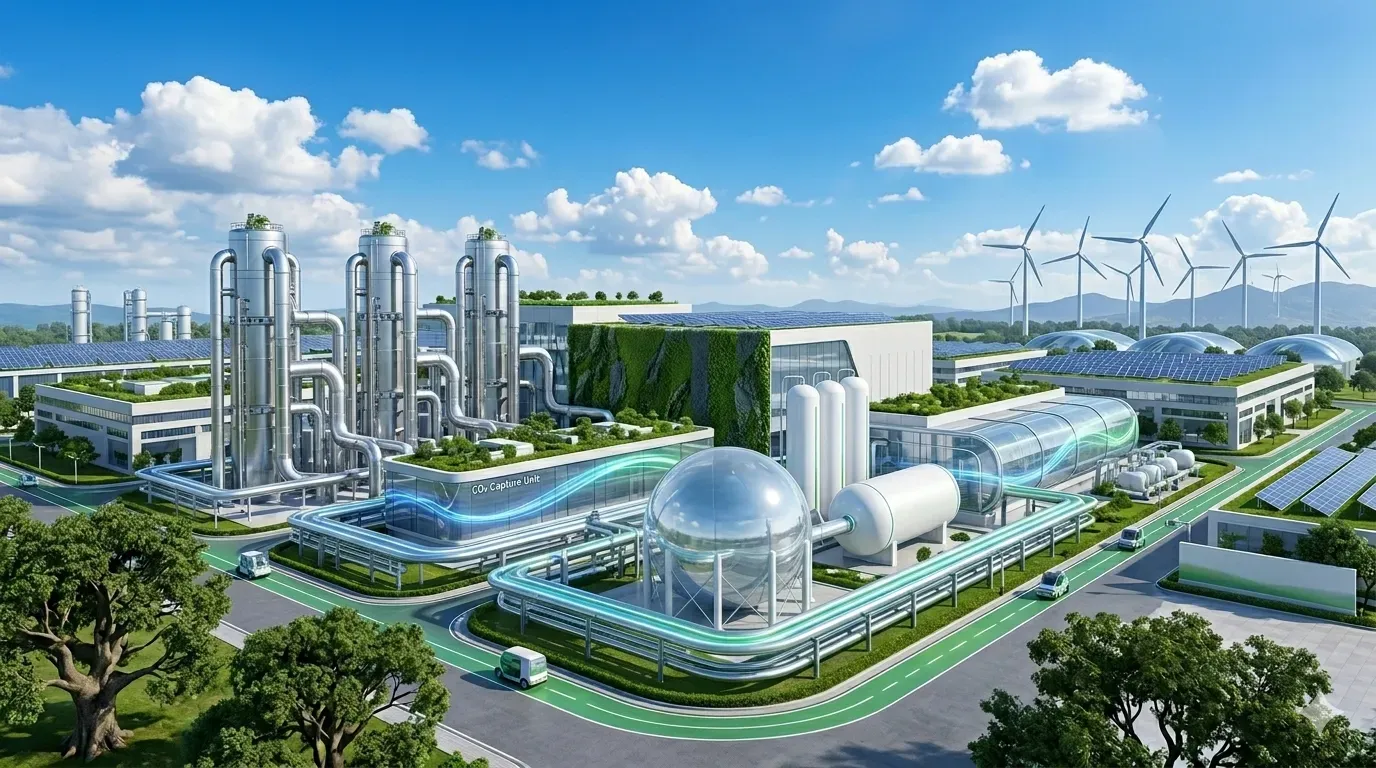
Brewery CO₂ Recovery Process Explained
How Breweries Recover Fermentation CO₂ for Reuse
Beer fermentation naturally generates carbon dioxide. Instead of venting this CO₂, breweries can collect, purify, liquefy and reuse it for carbonation and other brewery operations.
A typical brewery CO₂ recovery process is:CO₂ recovery plant captures carbon dioxide from an industrial gas stream, removes contaminants, compresses and dries the gas, and finally converts it into purified gaseous or liquid CO₂ for reuse or commercial sale.
Fermentation → CO₂ Collection → Defoaming & Washing → Compression → Purification → Drying → Liquefaction → Final Purification → Liquid CO₂ Storagebrewery fermentation, ethanol fermentation, molasses fermentation, chemical processes, biogas upgrading, dry ice production, or CO₂-rich industrial gas streams.
Why Recover Brewery CO₂?
Breweries consume CO₂ while simultaneously producing it.
CO₂ may be required for:
- Beer carbonation
- Tank blanketing
- Product transfer
- Packaging
- Process applications
Recovering fermentation CO₂ can therefore reduce dependence on externally purchased merchant CO₂.
Fermentation Gas Collection
CO₂ generated during fermentation is collected after the gas reaches suitable recovery conditions.
The raw gas can contain moisture, foam, traces of alcohol and volatile fermentation compounds.
Defoaming and Washing
Before compression, the gas is washed to remove entrained fermentation material and soluble contaminants.
Efficient washing protects downstream equipment and reduces impurity loading on the purification system.
Compression and Purification
The pretreated gas is compressed and then passed through purification and adsorption stages designed to remove moisture, odors and trace impurities.91% CO₂ and 8% methane, requiring a different purification strategy from fermentation CO₂.
Drying and Liquefaction
After deep drying, the purified CO₂ enters the refrigeration system.
CO₂ is condensed into liquid form while non-condensable gases are separated.
Storage and Brewery Reuse
The resulting liquid CO₂ is stored and can subsequently be vaporized and returned to brewery processes when required.
This creates a circular CO₂ supply:
Beer Fermentation → CO₂ Recovery → Liquid CO₂ → Brewery Reuse
YTC has experience with brewery CO₂ recovery projects ranging from approximately 1,000 kg/h systems to larger industrial installations, as part of its broader food-grade CO₂ recovery portfolio.
For breweries, the economic benefit comes not only from reducing CO₂ emissions but from replacing part of the purchased CO₂ requirement with an internally recovered product.
Depending on the project, YTC systems can incorporate:
- Multi-stage water washing
- Activated-carbon adsorption
- Molecular-sieve adsorption
- PSA purification
- Deodorization
- Impurity separation
- Final rectification
The objective is not simply to increase total CO₂ concentration, but to control individual contaminants according to the required product specification.
Step 5: Drying
Water must be removed before low-temperature liquefaction.
Residual moisture can freeze in low-temperature equipment and cause operating problems. Adsorption drying therefore provides the very low moisture level required for stable refrigeration and liquefaction.
Step 6: CO₂ Liquefaction
Purified and dried CO₂ is cooled under pressure until it condenses into liquid CO₂.
Non-condensable gases such as oxygen and nitrogen remain preferentially in the gas phase and can be separated during the liquefaction and purification process.
Step 7: Final Purification and Storage
Depending on product requirements, additional rectification or stripping can further remove light impurities.
The finished liquid CO₂ is then transferred to insulated storage tanks before being supplied to tankers, tank containers, dry ice systems or downstream users.
YTC systems can be engineered to produce CO₂ purity up to 99.998%, depending on feed-gas composition and process configuration.
YTC CO₂ Recovery Experience
YTC has executed more than 200 CO₂ treatment and recovery projects worldwide, covering fermentation, brewery, ethanol, industrial gas, flue gas and biogas applications.
Its engineering capability ranges from approximately 80 kg/h to 20,000 kg/h, allowing the process to be configured for both relatively small recovery systems and large industrial plants.
The fundamental principle remains the same:
Capture CO₂ that would otherwise be lost, remove the contaminants, convert it into a usable product, and return that CO₂ to the industrial value chain.