Why Is CO₂ Revert Gas Generated?
Dry ice is produced by expanding liquid CO₂ from its storage pressure to a lower pressure.
During this pressure reduction, only part of the liquid CO₂ forms solid CO₂ snow. The remainder becomes gaseous CO₂.
In a conventional dry ice production system without gas recovery, this low-pressure CO₂ is normally vented.
For continuous or large-volume dry ice production, the accumulated CO₂ loss can represent a significant operating cost.
YTC addresses this loss by recovering the revert gas and returning it to the liquid CO₂ production cycle.
________________________________________
How the CO₂ Revert Gas Recovery System Works
Process Flow
Dry Ice Machine
↓
CO₂ Revert Gas Collection
↓
CO₂ Buffer Balloon
↓
CO₂ Gas Conditioning
↓
Oil-Free CO₂ Compression
↓
Cooling & Refrigeration
↓
CO₂ Reliquefaction
↓
Liquid CO₂ Return
↓
Liquid CO₂ Storage Tank
↓
Reuse for Dry Ice Production
The result is a partially closed CO₂ recycling loop between dry ice production and liquid CO₂ storage.
________________________________________
Main System Components
1. CO₂ Revert Gas Collection
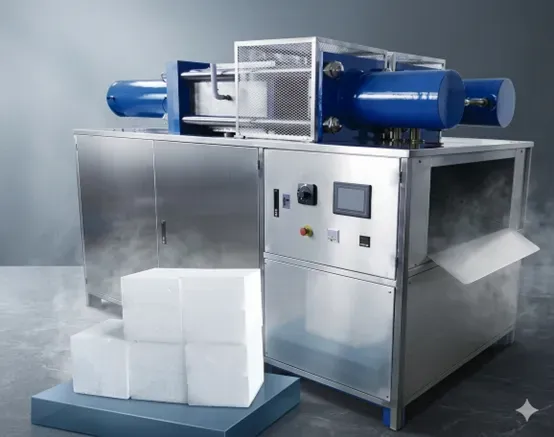
Low-pressure CO₂ generated by the dry ice pelletizer or block machine is collected instead of being discharged directly to atmosphere.
The gas-collection system is engineered to avoid interfering with the normal operation of the dry ice production equipment.
________________________________________
2. CO₂ Buffer Balloon
The buffer balloon provides temporary gas storage between the dry ice production equipment and the CO₂ compressor.
It helps accommodate fluctuations in revert-gas generation and provides more stable gas conditions for downstream compression.
Gas reheating or conditioning can be incorporated where required by site conditions.
________________________________________
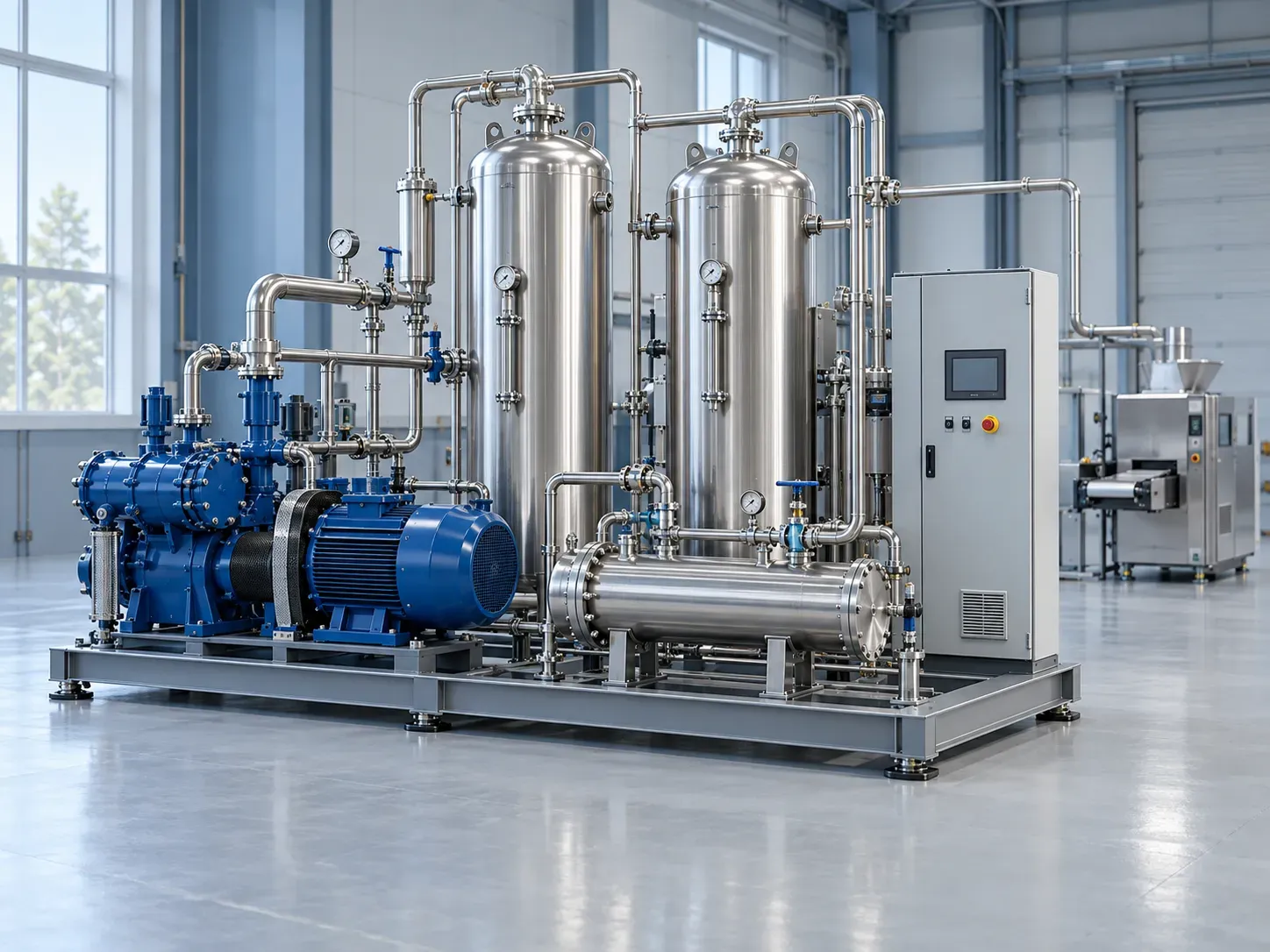
3. Oil-Free CO₂ Compressor
The recovered low-pressure CO₂ must be compressed before it can be reliquefied.
YTC’s current system concept uses a water-cooled, dry-running, non-lubricated two-stage CO₂ piston compressor.
For the existing YTC configuration, the recovered CO₂ can be compressed to approximately 18–20 barg before entering the downstream liquefaction section.
Final compressor configuration is selected according to gas flow, suction conditions, required discharge pressure and project requirements.
________________________________________
4. Cooling & CO₂ Reliquefaction
After compression, the recovered CO₂ is cooled and condensed using a refrigeration system.
The CO₂ liquefier removes the required heat from the compressed gas until the CO₂ returns to liquid form under the designed operating conditions.
The reliquefied CO₂ can then be returned to liquid storage.
________________________________________
5. Liquid CO₂ Return
Recovered liquid CO₂ is routed back to the liquid CO₂ storage system.
From storage, it can again be supplied to the dry ice production equipment.
This completes the recovery cycle:
Liquid CO₂ → Dry Ice → Revert CO₂ Gas → Recovery → Reliquefaction → Liquid CO₂
________________________________________
6. PLC Control System
The recovery process can be operated through an integrated PLC-based control system.
Depending on project scope, the control system coordinates:
• Revert-gas collection
• Buffer conditions
• Compressor operation
• Refrigeration and liquefaction
• Pressure and temperature monitoring
• Liquid CO₂ return
• Alarm and safety functions
• Start/stop sequences
The recovery plant can operate as a dedicated system or be integrated with the overall dry ice production controls.
________________________________________
CO₂ Utilization in Dry Ice Production
Conventional dry ice pellet and block production typically converts only part of the supplied liquid CO₂ into solid dry ice during each pass, while the remainder becomes revert gas.
YTC’s existing engineering basis indicates conventional dry ice production may achieve approximately 40–45% direct conversion of liquid CO₂ into dry ice, with approximately 55–60% becoming gaseous CO₂.
By recovering and reliquefying a substantial portion of this revert gas, overall CO₂ utilization can be significantly increased.
Depending on system configuration and operating conditions, YTC’s integrated recovery concept is designed to achieve overall CO₂ utilization of up to approximately 90–95%.
Actual recovery and utilization performance depends on dry ice equipment, operating conditions, gas-collection efficiency and system design.
________________________________________
Key Benefits
Recover Valuable CO₂
Capture process CO₂ that would otherwise be released from dry ice production.
Reduce Liquid CO₂ Consumption
Reliquefied CO₂ is returned to storage and reused, reducing the quantity of replacement liquid CO₂ required.
Improve Dry Ice Production Economics
The value of recovered CO₂ can reduce operating cost, particularly for continuous and high-volume dry ice production.
Increase Overall CO₂ Utilization
Combine conventional dry ice production with gas recovery and reliquefaction to obtain more useful dry ice from purchased or produced liquid CO₂.
Reduce Direct Process Venting
Recovering the revert stream reduces the amount of process CO₂ continuously discharged to atmosphere.
Retrofit Existing Dry Ice Plants
The recovery system can be evaluated for integration with existing dry ice pelletizers or block-making equipment, subject to the operating conditions and gas-collection arrangement of the existing plant.
________________________________________
Suitable Applications
The YTC CO₂ Revert Gas Recovery System is particularly relevant for:
• Commercial dry ice producers
• Industrial gas companies
• Large dry ice production facilities
• Dry ice pellet production
• Dry ice block production
• Facilities with high liquid CO₂ costs
• Sites with continuous dry ice demand
• CO₂ plants with integrated dry ice production
The economic value of recovery depends primarily on dry ice production volume, liquid CO₂ price, operating hours, utilities and achievable gas-recovery rate.
________________________________________
New-Build and Retrofit Solutions
New Dry Ice Production Plants
For new projects, YTC can engineer the revert-gas recovery system together with:
Liquid CO₂ Storage + Dry Ice Production + CO₂ Recovery + Compression + Reliquefaction + PLC Control
This allows the complete process to be optimized as one integrated system.
Existing Dry Ice Plants
For existing plants, YTC can evaluate the possibility of adding revert-gas recovery and reliquefaction equipment.
Typical engineering inputs include:
Dry ice machine capacity
Number of machines
Daily operating hours
Liquid CO₂ consumption
Existing CO₂ storage pressure
Available utilities
Current vent-gas arrangement
Project location
________________________________________
Is CO₂ Revert Gas Recovery Economically Attractive?
The answer depends on the individual plant.
The main economic variables are:
Annual dry ice production
Liquid CO₂ consumption
Local liquid CO₂ price
Annual operating hours
Electricity and cooling costs
Recoverable CO₂ volume
Required investment
For larger and continuously operated dry ice plants, the value of recovered CO₂ can become substantial.
YTC can evaluate the CO₂ mass balance and provide a project-specific recovery configuration based on the customer’s actual production data.
________________________________________
Turn CO₂ Loss into Reusable Liquid CO₂
A dry ice machine alone produces dry ice.
A CO₂ Revert Gas Recovery System goes one step further by recovering the gaseous CO₂ generated during production and returning it to the liquid CO₂ cycle.
With experience in CO₂ compression, refrigeration, liquefaction, storage and process integration, YTC can provide the recovery system as a standalone retrofit or as part of a complete dry ice production solution.