Why Front-End CO₂ Treatment Is Important
Raw CO₂ gas is rarely suitable for direct compression and liquefaction.
Depending on the gas source, the recovered CO₂ may contain:
• Foam
• Entrained liquid
• Water vapor
• Alcohol vapor
• Fermentation aerosols
• Condensable organic substances
• Water-soluble contaminants
• Other source-specific impurities
If these contaminants enter the compressor and downstream purification equipment, they can increase maintenance requirements, affect equipment performance, and increase the purification load.
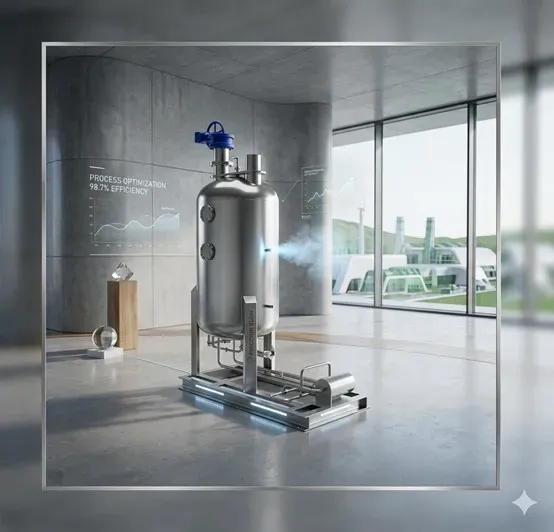
The Defoaming & Washing Unit provides an effective first barrier against these contaminants.
Its purpose is not to achieve final CO₂ purity, but to condition the raw gas and prepare it for subsequent compression, drying, purification, and liquefaction.
How the CO₂ Defoaming & Washing Unit Works
1. Raw CO₂ Gas Collection
Raw CO₂ gas enters the pretreatment system from the designated recovery source.
For fermentation applications, the gas may contain significant amounts of moisture, alcohol vapor, foam, and entrained fermentation liquid.
The inlet conditions are monitored and controlled according to the actual process requirements.
2. Defoaming
Fermentation gas can carry foam and liquid droplets from the fermentation process.
The defoaming section reduces foam formation and separates entrained liquid before the gas proceeds to downstream equipment.
Effective defoaming helps minimize liquid carryover and provides a more stable gas stream for compression.
3. Gas Washing
The CO₂ gas passes through a controlled washing section where direct gas-liquid contact removes soluble contaminants and entrained substances.
The washing configuration can be selected according to the composition of the raw CO₂ and the required pretreatment performance.
4. Cooling and Condensation
The raw CO₂ may contain substantial quantities of water vapor and condensable components.
Controlled cooling reduces the gas temperature and promotes the condensation of water and other condensable substances.
The resulting liquid is separated and removed from the gas stream, reducing the moisture and condensable load entering the compressor and downstream drying system.
5. Gas-Liquid Separation
Dedicated separation equipment removes the liquid phase and minimizes carryover into the CO₂ compressor.
Stable gas-liquid separation is particularly important for protecting compressors, valves, pipelines, heat exchangers, and other downstream equipment.
6. Conditioned CO₂ Output
After defoaming, washing, cooling, and separation, the treated CO₂ gas is transferred to the compression stage.
The cleaner and more stable gas stream provides improved conditions for subsequent CO₂ compression, adsorption and drying, purification, and liquefaction.
Protecting the CO₂ Compressor
The CO₂ compressor is one of the most important pieces of equipment in a recovery plant.
Liquid carryover, foam, and excessive condensable impurities can negatively affect compressor operation and increase maintenance requirements.
The Defoaming & Washing Unit helps reduce these risks by removing free liquid and condensable contaminants before compression.
This front-end treatment can help:
• Reduce liquid carryover
• Reduce compressor contamination
• Improve compressor operating stability
• Reduce downstream moisture loading
• Extend the service life of critical equipment
• Improve overall plant reliability
Cooling and Condensation
Cooling is an important part of the pretreatment process.
Depending on the raw gas composition, controlled cooling can condense:
• Water
• Alcohol or other volatile condensables
• Organic substances
• Other process-related condensable components
The condensed liquid is then separated from the CO₂ gas.
The cooling configuration is designed according to the inlet gas temperature, flow rate, composition, and required pretreatment performance.
Heat exchangers and circulating cooling systems can be integrated where appropriate to improve process stability and energy efficiency.
Designed for Different CO₂ Sources
The composition of raw CO₂ varies significantly according to its source.
Ethanol & Fermentation CO₂
Fermentation-based CO₂ may contain moisture, alcohol vapor, foam, aerosols, and other fermentation-related impurities.
The washing and defoaming system is designed to remove these contaminants before compression and deep purification.
Brewery CO₂
CO₂ generated during beer fermentation may contain moisture, fermentation aerosols, foam, and other process-related substances.
The pretreatment system helps provide a cleaner gas stream for downstream recovery.
Molasses & Sugar-Based Fermentation
CO₂ generated from molasses and other sugar-based fermentation processes may contain entrained liquid, moisture, alcohol, and organic impurities.
The washing configuration can be customized according to the actual fermentation process and gas composition.
Other Industrial CO₂ Sources
For flue gas, chemical process gas, natural gas, or other industrial CO₂ sources, the pretreatment configuration can be adapted according to the actual feed-gas analysis.
Additional purification technologies may be required depending on the impurity profile and final CO₂ specification.
Integration with the Complete CO₂ Recovery Plant
The Defoaming & Washing Unit is the first stage of the complete CO₂ recovery process.
A typical process flow is:
Raw CO₂ Gas
↓
Defoaming & Washing
↓
CO₂ Compression
↓
Adsorption & Drying
↓
CO₂ Purification
↓
CO₂ Liquefaction
↓
Liquid CO₂ Storage
Each process unit performs a specific purification or conditioning function.
The washing system removes contaminants that are most effectively handled at the beginning of the process, while downstream equipment performs deeper drying, purification, and liquefaction.
This staged approach improves overall process efficiency and allows the complete system to be customized according to the actual feed-gas composition.
Automatic Control and Monitoring
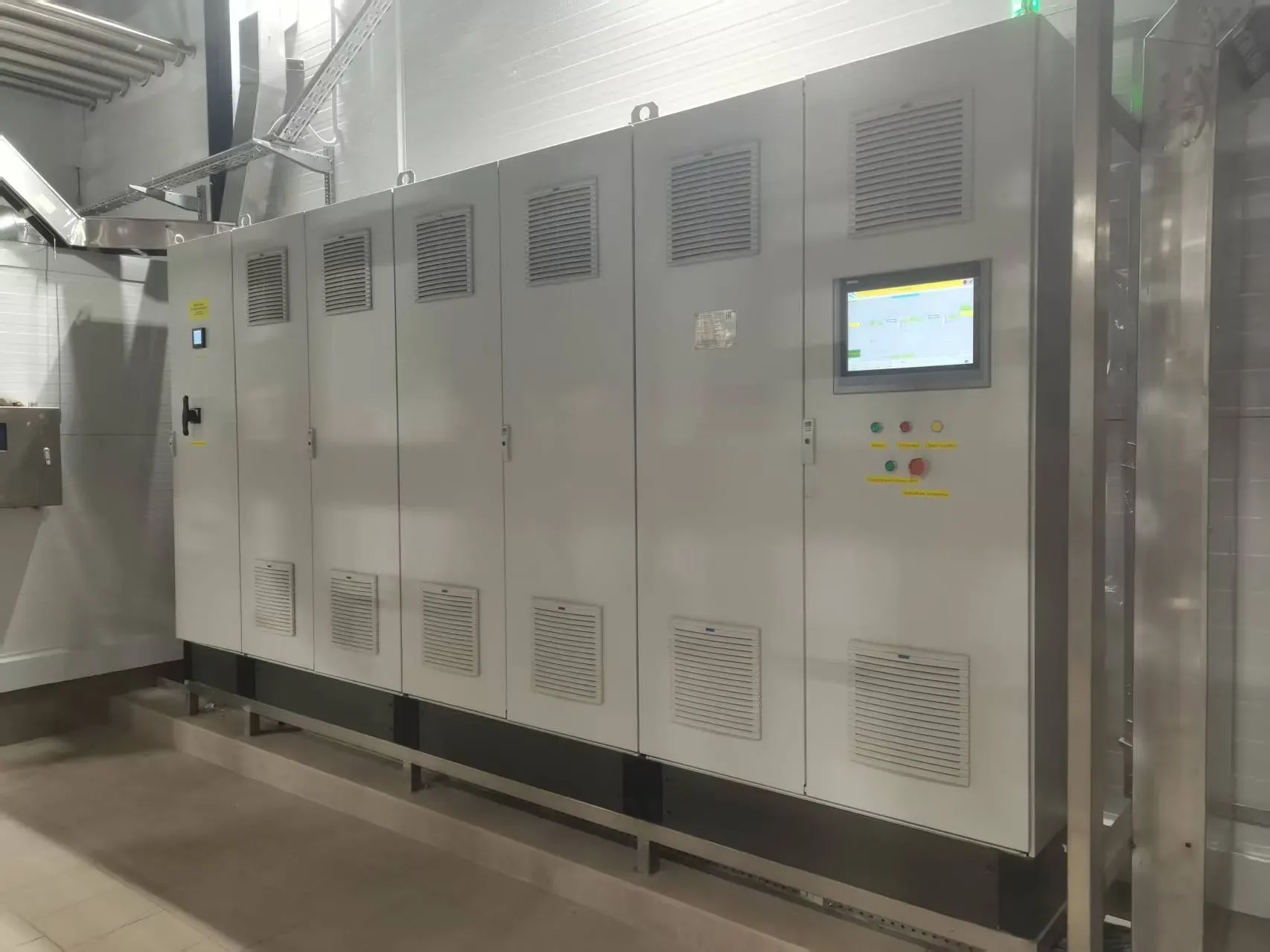
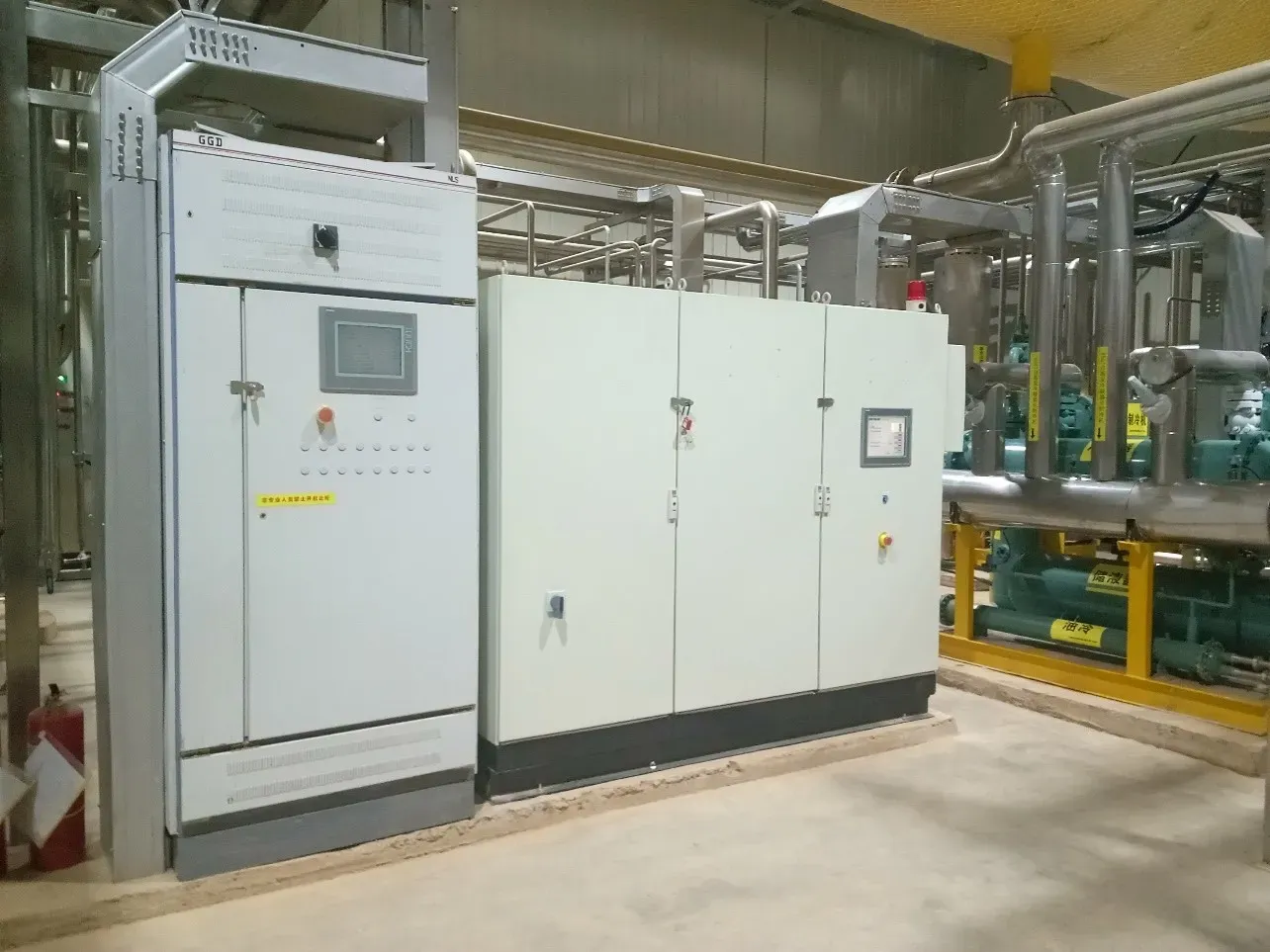
The Defoaming & Washing Unit can be integrated into the plant’s PLC/DCS control system.
Key operating parameters can be monitored automatically, including:
• Gas pressure
• Gas temperature
• Washing liquid level
• Circulation status
• Cooling conditions
• Differential pressure
• Alarm status
Automatic control helps maintain stable washing and separation conditions while coordinating the pretreatment system with the downstream CO₂ compressor and purification equipment.
Supporting High-Purity CO₂ Production
The washing system is only the first purification stage of a complete CO₂ recovery plant.
It removes the contaminants that are most effectively handled at the front end, while subsequent systems perform deeper purification.
A complete YTC CO₂ recovery system can integrate:
Defoaming & Washing → Compression → Adsorption & Drying → Purification → Liquefaction → Storage
Depending on the feed-gas composition and overall process configuration, the complete system can produce high-purity liquid CO₂ up to 99.998%.
The final CO₂ specification is determined by the complete purification process and the customer’s product requirements.
YTC CO₂ Pretreatment Solution
YTC provides customized CO₂ pretreatment, compression, purification, drying, liquefaction, storage, and automatic control solutions for different CO₂ recovery applications.
With 16+ years of experience in CO₂ treatment and recovery and 200+ CO₂ projects completed worldwide, YTC combines process engineering, equipment manufacturing, installation, commissioning, and technical support within an integrated project solution.
Each Defoaming & Washing Unit is designed according to the customer’s feed-gas composition, gas flow rate, temperature, pressure, contaminant profile, and final CO₂ specification.
By providing stable and properly conditioned feed gas, YTC helps establish a reliable foundation for the entire CO₂ recovery process—from raw CO₂ collection to high-purity liquid CO₂ production.