
Why Ethanol Dehydration Is Required
Ethanol and water form an azeotropic mixture, which limits the concentration that can practically be achieved through conventional distillation alone.
For applications requiring anhydrous ethanol, residual water must therefore be removed through an additional separation process.
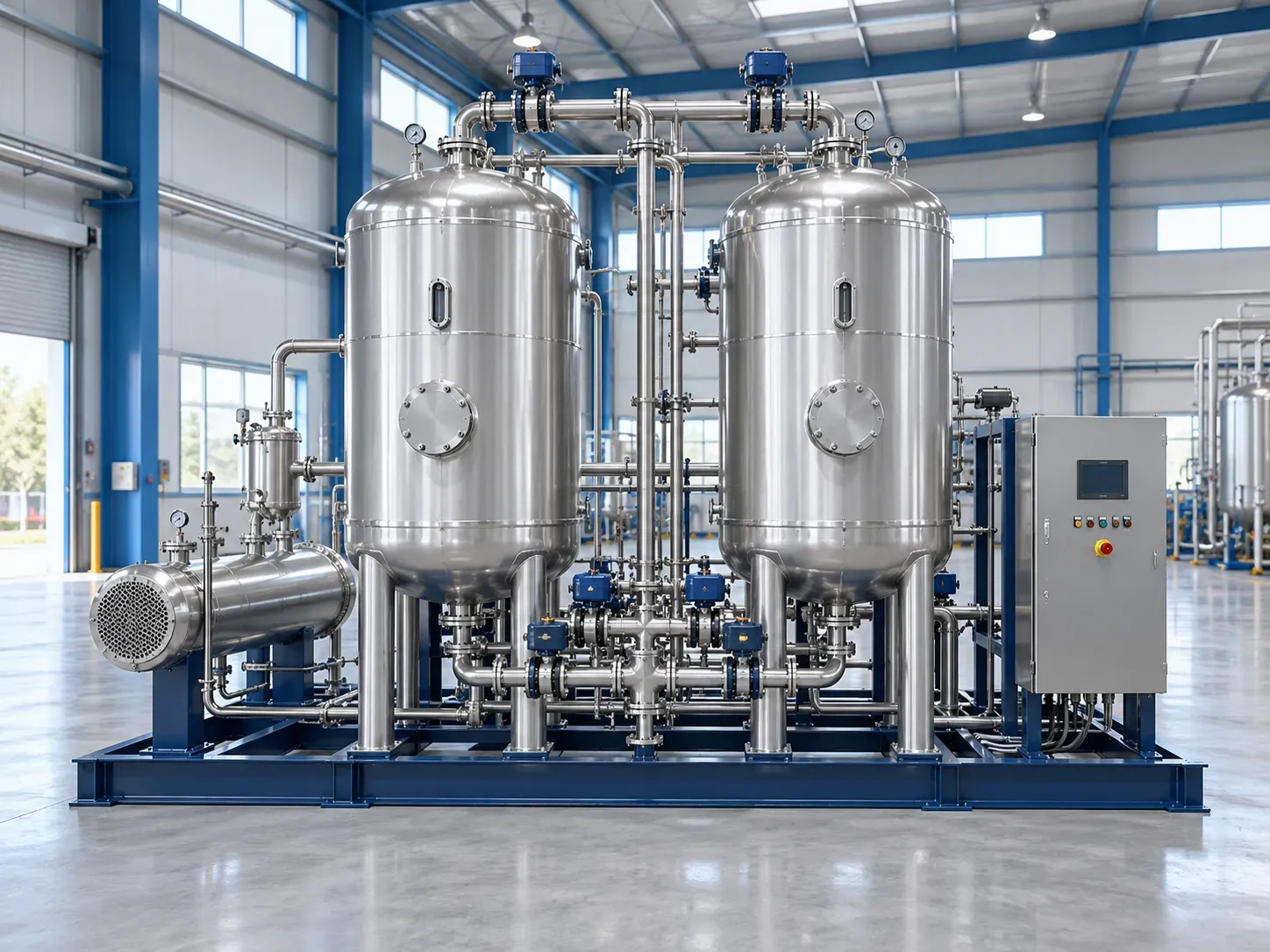
Molecular sieve dehydration uses the selective adsorption properties of the molecular sieve material to remove water while allowing ethanol to pass through the adsorption bed.
________________________________________
Ethanol Dehydration Process
A typical YTC dehydration process can include:
Concentrated Ethanol
↓
Feed Preheating
↓
Ethanol Vaporization
↓
Molecular Sieve Adsorption
↓
Water Removal
↓
Anhydrous Ethanol Vapor
↓
Condensation
↓
Anhydrous Ethanol Product
The exact process configuration is selected according to feed concentration, required product specification, plant capacity and available utilities.
________________________________________
Molecular Sieve Adsorption
The molecular sieve adsorbent preferentially captures water from the ethanol stream.
As the adsorption bed gradually approaches its working capacity, it must be regenerated.
For continuous industrial production, multiple adsorption vessels can operate in alternating cycles.
While one vessel is in the adsorption stage, another can undergo regeneration and preparation for the next adsorption cycle.
This allows the dehydration system to maintain continuous ethanol production.
________________________________________
Adsorption & Regeneration Cycle
The operating sequence typically involves:
Adsorption → Pressure / Process Transition → Regeneration → Preparation → Adsorption
The control system coordinates switching between adsorption vessels according to the selected process sequence.
Stable cycle control is important for maintaining:
• Product consistency
• Adsorbent utilization
• Continuous production
• Stable pressure conditions
• Reliable regeneration
________________________________________
Integration with Distillation
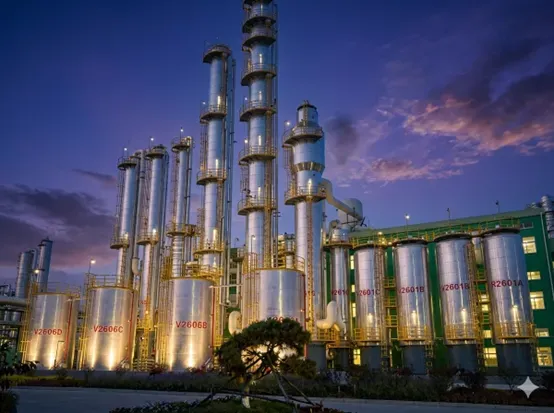
The dehydration system is normally installed downstream of ethanol distillation and rectification.
Complete Process
Fermentation
↓
Distillation
↓
Rectification
↓
Concentrated Ethanol
↓
Molecular Sieve Dehydration
↓
Anhydrous Ethanol
↓
Product Storage
The distillation and dehydration sections should therefore be engineered together to optimize feed conditions, thermal integration and overall plant operation.
________________________________________
Heat & Energy Integration
Ethanol dehydration involves heating, vaporization, adsorption, regeneration and condensation.
YTC considers the dehydration system together with the upstream distillation section to identify opportunities for thermal integration.
Depending on the process configuration, integration can include:
• Feed preheating
• Heat recovery
• Vapor-energy utilization
• Condensate recovery
• Cooling optimization
• Coordination with distillation operating pressure
The final arrangement is selected according to plant utilities and process requirements.
________________________________________
Automatic Process Control
The dehydration system can be operated through PLC or DCS control.
Typical monitored and controlled parameters can include:
• Feed flow
• Feed temperature
• Vaporization conditions
• Adsorption pressure
• Bed temperature
• Valve sequence
• Regeneration conditions
• Product concentration
• Condensation conditions
• Equipment status
• Alarm and interlock status
Automatic sequencing allows the adsorption and regeneration vessels to operate as a coordinated continuous-production system.
________________________________________
Applications
YTC ethanol dehydration systems can be integrated into plants producing anhydrous ethanol for applications where residual water must be reduced beyond the level achievable by conventional distillation.
The final product specification is determined according to the customer’s downstream application and applicable product requirements.
________________________________________
YTC Integrated Ethanol Solution
The dehydration system can be supplied as part of a complete YTC ethanol production plant:
Raw Material Preparation → Fermentation → Distillation & Rectification → Molecular Sieve Dehydration → Anhydrous Ethanol Storage
The complete plant can also incorporate:
Fermentation CO₂ → Recovery → Purification → Liquefaction → Liquid CO₂ Storage
and:
Stillage → Resource Recovery / Treatment
This allows ethanol purification, energy utilization and by-product recovery to be considered within one integrated plant design.
________________________________________
YTC Ethanol Dehydration Engineering
YTC can provide process engineering, molecular sieve system integration, equipment supply, automation, installation guidance, commissioning and technical support.
Each dehydration system is engineered according to the customer’s plant capacity, ethanol feed conditions, required final product specification, operating pressure, available utilities and overall ethanol process configuration.
Request an Ethanol Dehydration System Proposal