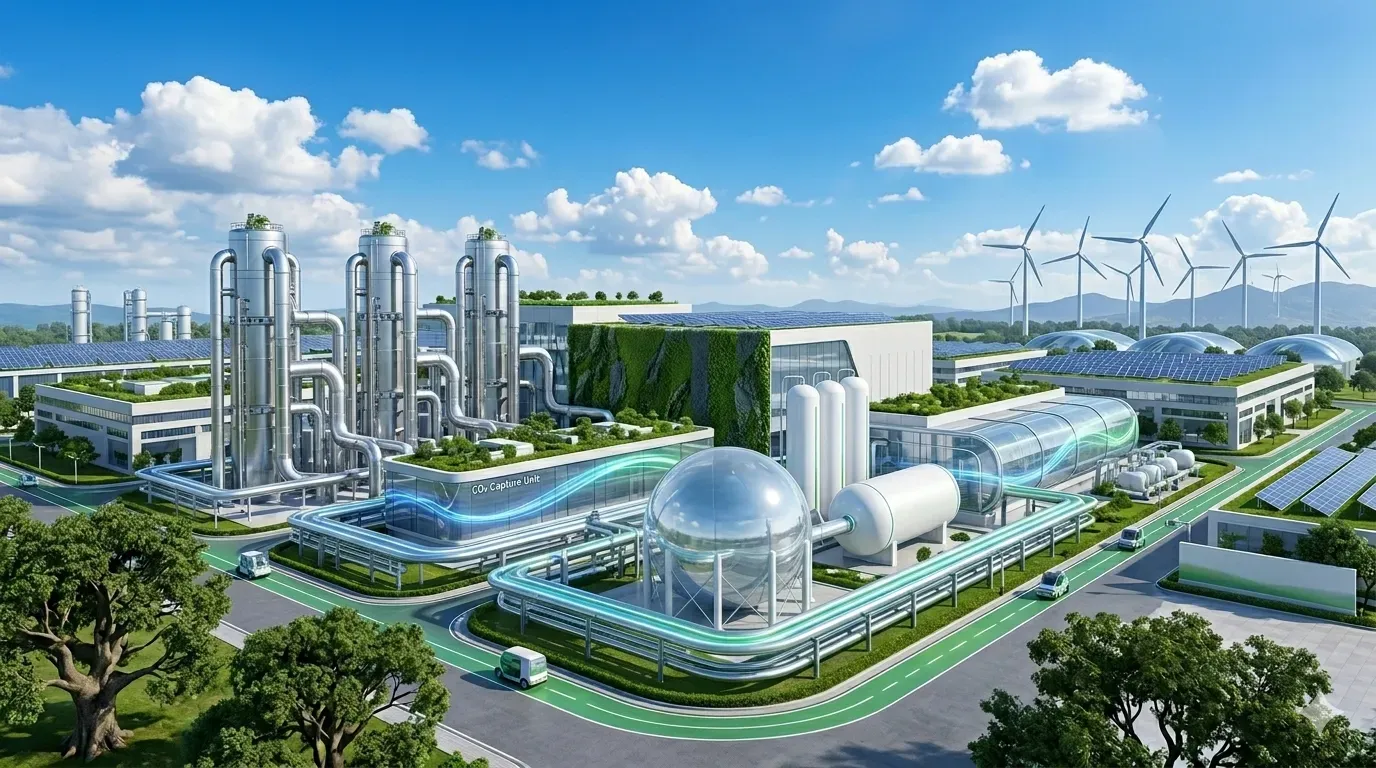
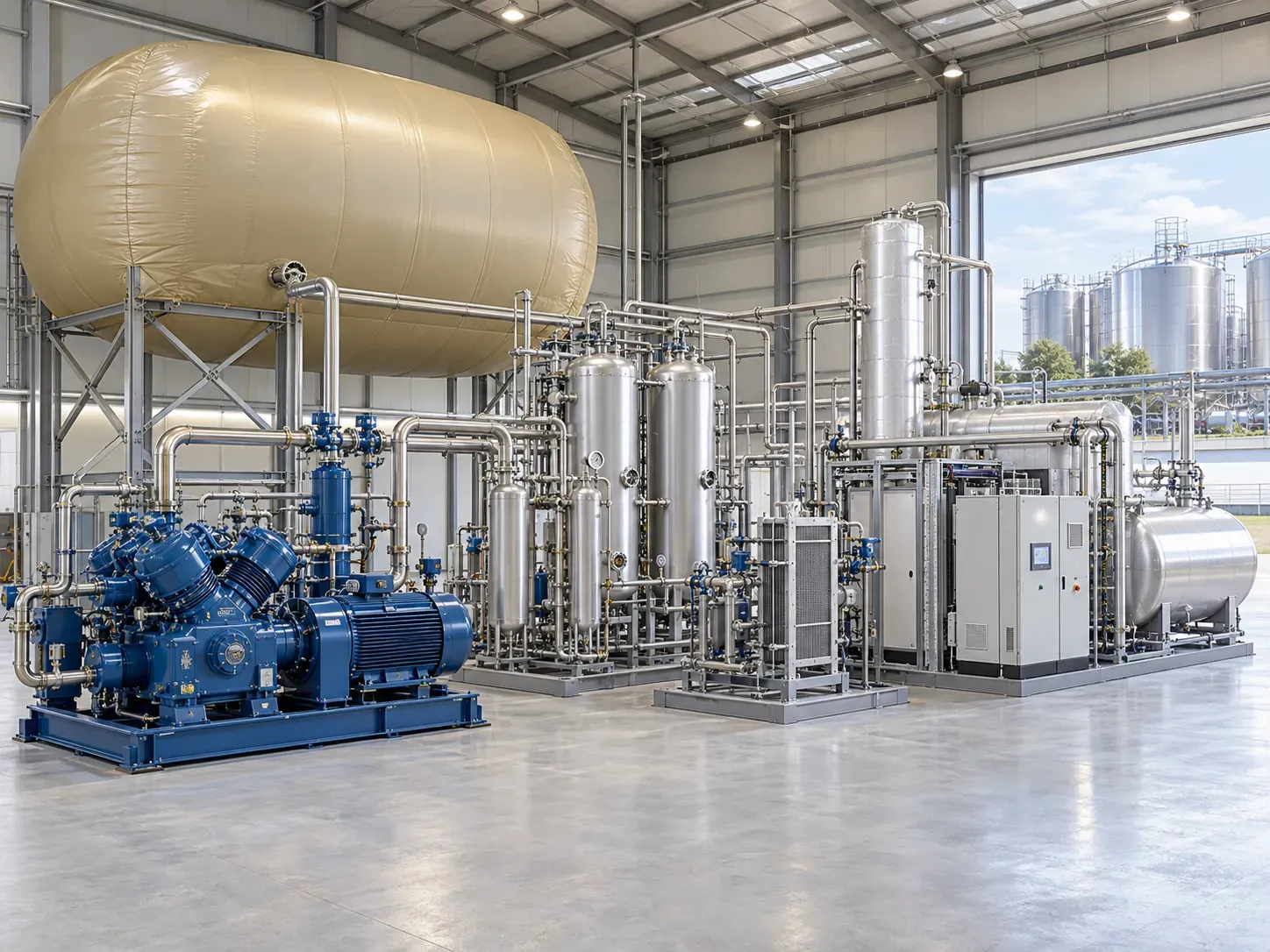
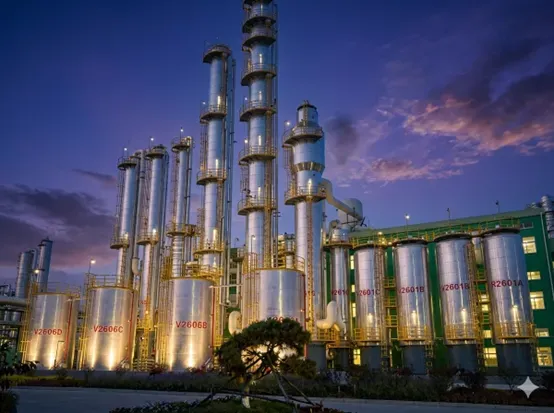
Fermentation CO₂ Recovery System
________________________________________
Why Recover Fermentation CO₂?
During ethanol fermentation, yeast converts fermentable sugars into ethanol and carbon dioxide.
A simplified reaction is:
C₆H₁₂O₆ → 2 C₂H₅OH + 2 CO₂
This means CO₂ is not an accidental waste stream but a natural co-product of fermentation.
Where sufficient CO₂ volume and suitable operating conditions are available, recovering this gas can provide an additional commercial product while reducing direct process venting.
________________________________________
Typical Fermentation CO₂ Recovery Process
A complete system can include:
Fermentation CO₂ Collection
↓
Defoaming & Gas Washing
↓
CO₂ Compression
↓
Primary Purification
↓
Deep Drying & Adsorption
↓
Refrigeration
↓
CO₂ Liquefaction
↓
Final Purification / Rectification
↓
High-Purity Liquid CO₂
↓
Liquid CO₂ Storage & Distribution
The exact purification route depends on the feed-gas composition and required final CO₂ quality.
________________________________________
1. CO₂ Collection
Fermentation gas is collected from fermenters and routed to the CO₂ recovery plant.
The collection system should minimize unnecessary air ingress because oxygen and nitrogen introduced upstream increase the purification duty later in the process.
Stable collection also helps provide more consistent conditions for downstream equipment.
________________________________________
2. Defoaming & Gas Washing
Fermentation off-gas can contain:
• Foam
• Entrained liquid droplets
• Moisture
• Ethanol vapor
• Fermentation aerosols
• Water-soluble impurities
• Odor-forming compounds
The first treatment stage conditions the gas before compression.
Washing and separation help remove entrained contaminants and reduce the impurity load entering downstream equipment.
________________________________________
3. CO₂ Compression
The conditioned CO₂ is compressed to the pressure required for subsequent purification and liquefaction.
Compressor configuration is selected according to:
• Gas flow
• Suction pressure
• Required discharge pressure
• Gas composition
• Plant turndown
• Operating schedule
• Downstream process requirements
Interstage cooling and condensate separation can be incorporated into the compression section.
________________________________________
4. CO₂ Purification
Fermentation CO₂ can contain trace impurities that must be controlled according to the required final product specification.
Depending on the project, purification can incorporate technologies such as:
• Water washing
• Activated carbon adsorption
• Multi-bed adsorption
• Deodorization
• Source-specific impurity removal
• Condensation and separation
• Final rectification
YTC selects the purification process according to actual feed-gas analysis rather than applying one fixed purification route to every fermentation plant.
________________________________________
5. Deep Drying & Adsorption
Moisture must be reduced before low-temperature liquefaction.
Residual water can freeze under refrigeration conditions and interfere with heat exchangers, valves and downstream equipment.
The adsorption and drying section therefore provides deep dehydration and can simultaneously remove selected trace contaminants depending on adsorbent configuration.
________________________________________
6. Refrigeration & CO₂ Liquefaction
After compression, purification and drying, the CO₂ gas is cooled until it condenses into liquid CO₂.
The refrigeration and liquefaction system is engineered according to:
• CO₂ flow
• Gas pressure
• Cooling-water conditions
• Ambient temperature
• Required liquefaction temperature
• Product specification
• Plant operating range
Non-condensable components can be separated during the low-temperature process.
________________________________________
7. Final Purification
Where required by the final product specification, additional purification or rectification can be incorporated into the liquefaction section.
This stage helps separate residual volatile and non-condensable components from the liquid CO₂ product.
Depending on feed-gas conditions and process configuration, YTC fermentation CO₂ recovery systems can produce liquid CO₂ with purity up to 99.998%.
Final product guarantees are established according to the individual project specification.
________________________________________
8. Liquid CO₂ Storage
Finished liquid CO₂ is transferred to insulated storage tanks for temporary storage and distribution.
YTC can integrate:
• Liquid CO₂ storage tanks
• Loading systems
• Liquid CO₂ road tankers
• Tank containers
• Cryogenic cylinders
• Distribution interfaces
This enables the recovery plant to extend from fermentation gas collection through finished liquid CO₂ storage and delivery.
________________________________________
Applications
Fermentation CO₂ recovery can be applied to:
Ethanol Plants
Recover CO₂ generated during grain, cassava, corn, molasses and other ethanol fermentation processes.
Distilleries
Convert fermentation gas from alcohol production into a commercially useful liquid CO₂ product.
Breweries
Recover brewery fermentation CO₂ for purification, liquefaction, storage and reuse.
Other Fermentation Industries
Projects can be evaluated where biological fermentation generates a sufficiently concentrated and recoverable CO₂ stream.
________________________________________
Food-Grade CO₂ Production
Food-grade CO₂ quality cannot be defined by total CO₂ purity alone.
The complete product specification should consider individual contaminants relevant to the feed gas and intended application.
Depending on the project, these can include:
• Moisture
• Oxygen
• Carbon monoxide
• Hydrocarbons
• Sulfur compounds
• Volatile organic compounds
• Odor-related contaminants
• Other source-specific impurities
YTC designs the purification system according to the customer’s contractual specification and applicable product-quality requirements.
________________________________________
Integrated with Ethanol Production
One of the strongest applications of fermentation CO₂ recovery is integration with a complete ethanol production plant.
Primary Product
Feedstock → Fermentation → Distillation → Dehydration → Finished Ethanol
Valuable Co-Product
Fermentation CO₂ → Recovery → Purification → Liquefaction → Liquid CO₂
Instead of considering ethanol and CO₂ as separate processes, YTC can engineer both systems around the overall material balance and plant operating conditions.
This creates more value from the same feedstock.
________________________________________
YTC Fermentation CO₂ Recovery Engineering
YTC provides engineering and system integration covering:
• Feed-gas evaluation
• Process design
• CO₂ mass-balance calculation
• Equipment engineering
• CO₂ washing
• Compression
• Purification
• Adsorption and drying
• Refrigeration
• Liquefaction
• Liquid CO₂ storage
• PLC / DCS controls
• Installation guidance
• Commissioning
• Operator training
• Technical support
Each project is engineered according to the actual CO₂ source, feed-gas composition, gas flow, operating hours, required product quality, utilities and site conditions.
Turn Fermentation CO₂ into a Commercial Product
Fermentation produces both ethanol and CO₂.
YTC helps customers recover value from both.
Send us your fermentation gas composition, CO₂ flow, operating hours, required liquid CO₂ capacity and final product specification.
YTC can evaluate the design basis and recommend an appropriate CO₂ recovery, purification and liquefaction process.